

OpenBrand Acquires Comperemedia from Mintel Group
Today we are announcing that OpenBrand has acquired Comperemedia from Mintel Group.
This is the next step in our mission to build a real-time market intelligence solution that helps brands use data and expert-led insights to beat the competition and win their markets. We have spent the last three years building the most trusted intelligence platform in consumer durable goods. Comperemedia extends that commitment into new verticals — bringing the same depth-first approach to financial services, insurance, telecom, and media that we have always applied to durables.
For our existing customers: your platform, your data, your team, and your 2026 roadmap are unchanged. This is an expansion, not a pivot.
Below is our full press release.
OpenBrand Acquires Comperemedia from Mintel Group
The acquisition expands OpenBrand’s real-time market intelligence platform into new verticals, with a long-term strategic data partnership between OpenBrand and Mintel ensuring continuity for clients
San Diego, CA — Building the best market intelligence platform in one industry is hard. Most companies try to cover everything and go deep in nothing. OpenBrand chose the other path, spending years becoming the most trusted intelligence platform for consumer durable goods before expanding elsewhere.
Today, OpenBrand is expanding.
OpenBrand has acquired Comperemedia from Mintel, the global leader in market intelligence. Comperemedia is the leading competitive marketing intelligence platform for brands in financial services, insurance, telecom, and media, tracking direct mail, creative strategy, advertising spend, and messaging trends across channels. Like OpenBrand, Comperemedia has built its reputation by going deep in the markets it serves.
OpenBrand’s mission is to build a real-time market intelligence platform that helps companies use data and expert-led insights to beat the competition and win their markets. Having established deep expertise and market leadership in consumer durables, this acquisition is the next step in extending that platform into new verticals.
Comperemedia will operate as “Comperemedia, an OpenBrand Company.” Ben Dietz, President of Comperemedia, joins the OpenBrand executive team. As part of the transaction, OpenBrand and Mintel have established a long-term strategic data partnership. Comperemedia clients who rely on Mintel’s consumer insights will retain that access. Continuity of data and client experience was a priority built into the foundation of this deal. The partnership reflects the mutual respect both organizations have for the clients and the work Comperemedia has built within Mintel Group.
Greg Munves, CEO, OpenBrand:
“This acquisition expands our mission. We started in consumer durables where we paired the best intelligence in the market with people who have deep industry expertise. Comperemedia took that same approach in financial services, insurance, and telecom. That is why this felt right.”
Peter Haigh, Chairman, Mintel:
“Comperemedia has been an important part of Mintel for many years, and today marks the beginning of its next chapter. We’re incredibly proud of the people who have built the business into what it is today and confident OpenBrand is the right organization to support its next stage of growth while preserving the expertise and client relationships that have defined Comperemedia’s success. Our long-term partnership also ensures clients will continue benefiting from the complementary strengths of both businesses.”
About OpenBrand
OpenBrand is the real-time market intelligence platform for consumer durable goods brands and retailers. OpenBrand tracks market share, pricing, promotion, and product placement data to help brands and retailers beat the competition and win share. Learn more at openbrand.com.
About Comperemedia
Comperemedia is the leading competitive marketing intelligence platform in the U.S., providing cross-channel share of voice and direct mail intelligence to brands in financial services, insurance, telecom, and media. Learn more at comperemedia.com.
About Mintel
As a market intelligence agency, Mintel’s understanding of consumers, innovation and global markets gives their clients the clarity to act and the confidence to lead. With over 50 years of expertise and millions of data points, they fuse the real-world understanding of Mintel experts with cutting-edge technology to uncover patterns and predict the future. Visit mintel.com to learn more.
Media Contact
Sidney Waterfall | press@openbrand.com
Contact us to learn more about OpenBrand or Comperemedia


Winning Seasonal Promotions: Real-Time Pricing Intelligence Playbook
Winning Seasonal Promotions Step One: Gather Insights
The goal: build a competitive baseline before the cycle starts, while there’s still time to act on it.
Start by building a baseline before the cycle begins. Ahead of your next seasonal sales period, analyze consumer purchase survey data, economic forecasting, and pricing and promotional data to gauge brand performance during the last seasonal cycle and current macroeconomic conditions.
In OpenBrand’s app, the Research Library gives you category-specific, analyst-written market reports and videos alongside curated industry news, so you can see where the category is heading and which competitive dynamics are already in motion. This is your chance to get smart on the season ahead while there’s still time to plan around it.
Before your team spends hours pulling last season’s data, check the Research Library first. OpenBrand’s analysts have already done much of that work — category recaps, competitive pricing summaries, and promotional timing breakdowns are ready and waiting. The discount percentages, ad spend figures, and timing patterns you need are right there, built into the report. Your job is to find it, read it, and build your plan from there.
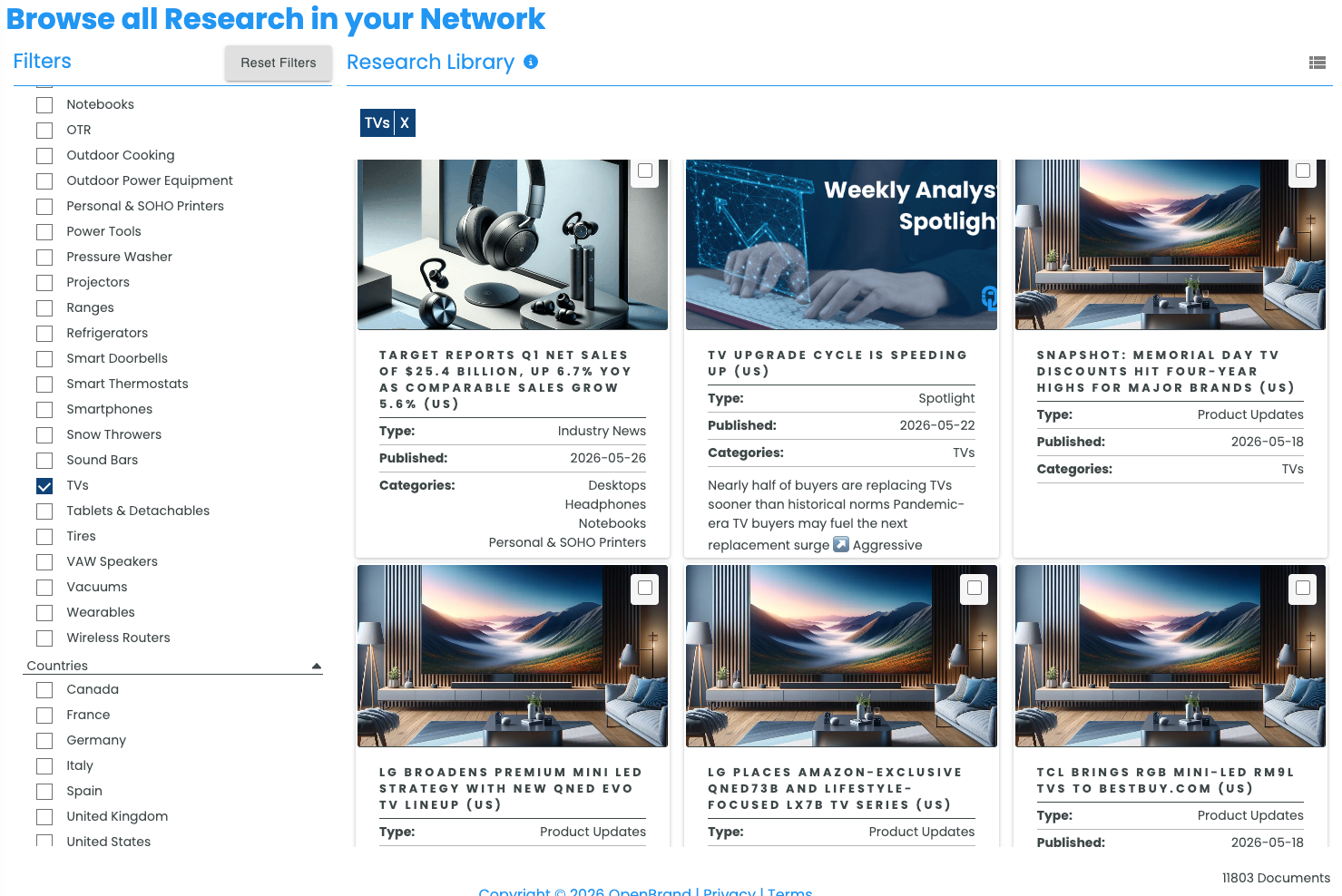
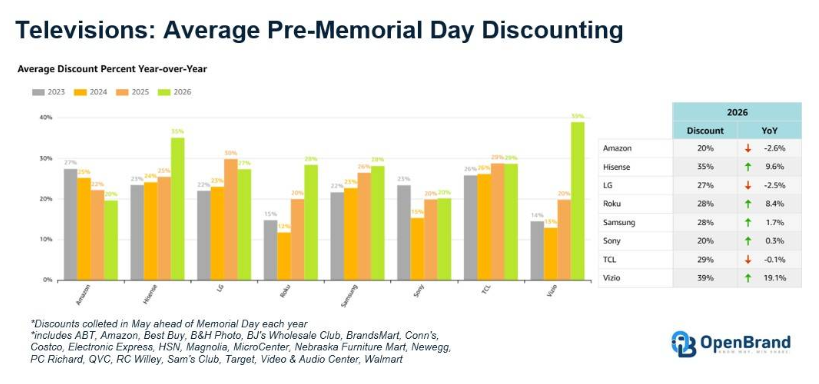
Pricing teams should mine the prior seasons for YOY and seasonal patterns. Television manufacturers planning for Black Friday, for example, use our Research Library to find competitor performance, discount depth and frequency, and advertising activity from the year prior. This helps create a narrative around what happened last time and how to adjust for the coming season.
Winning Seasonal Promotions Step Two: Analyze Data
The goal: turn last season’s competitive activity into a defensible plan for this one.
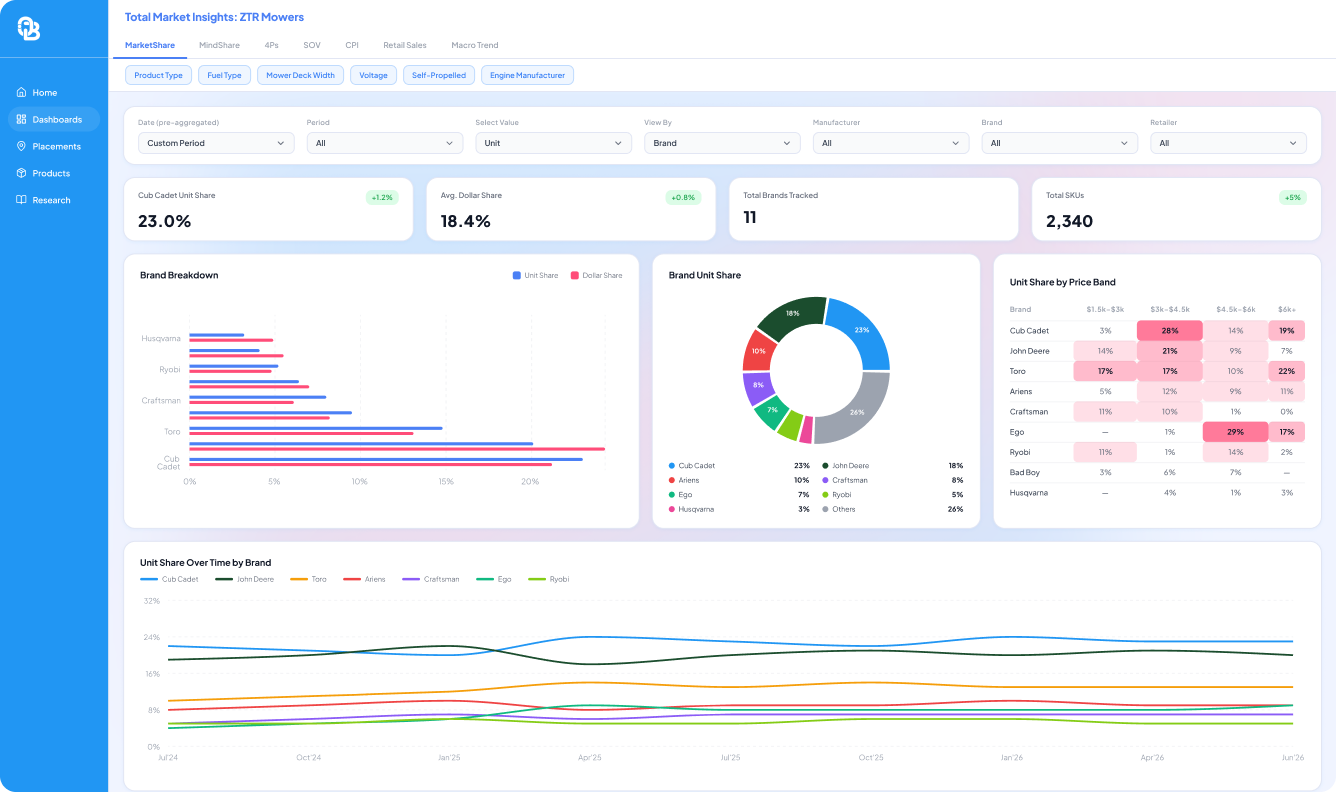
This is where analytics teams turn observation into a defensible plan. Many of OpenBrand’s customers rely on Total Market Insights, a dashboard that unites OpenBrand’s data resources across market share, consumer behavior, and competitive intelligence (pricing, promotions, products, and placement).
This data helps brands and retailers understand when competitors begin to offer new promotions, how quickly items sell out, and when and where sales are being advertised. Companies can also create custom reports that sort advertising, pricing, product specifications, promotions, and more by country, category, and date range.
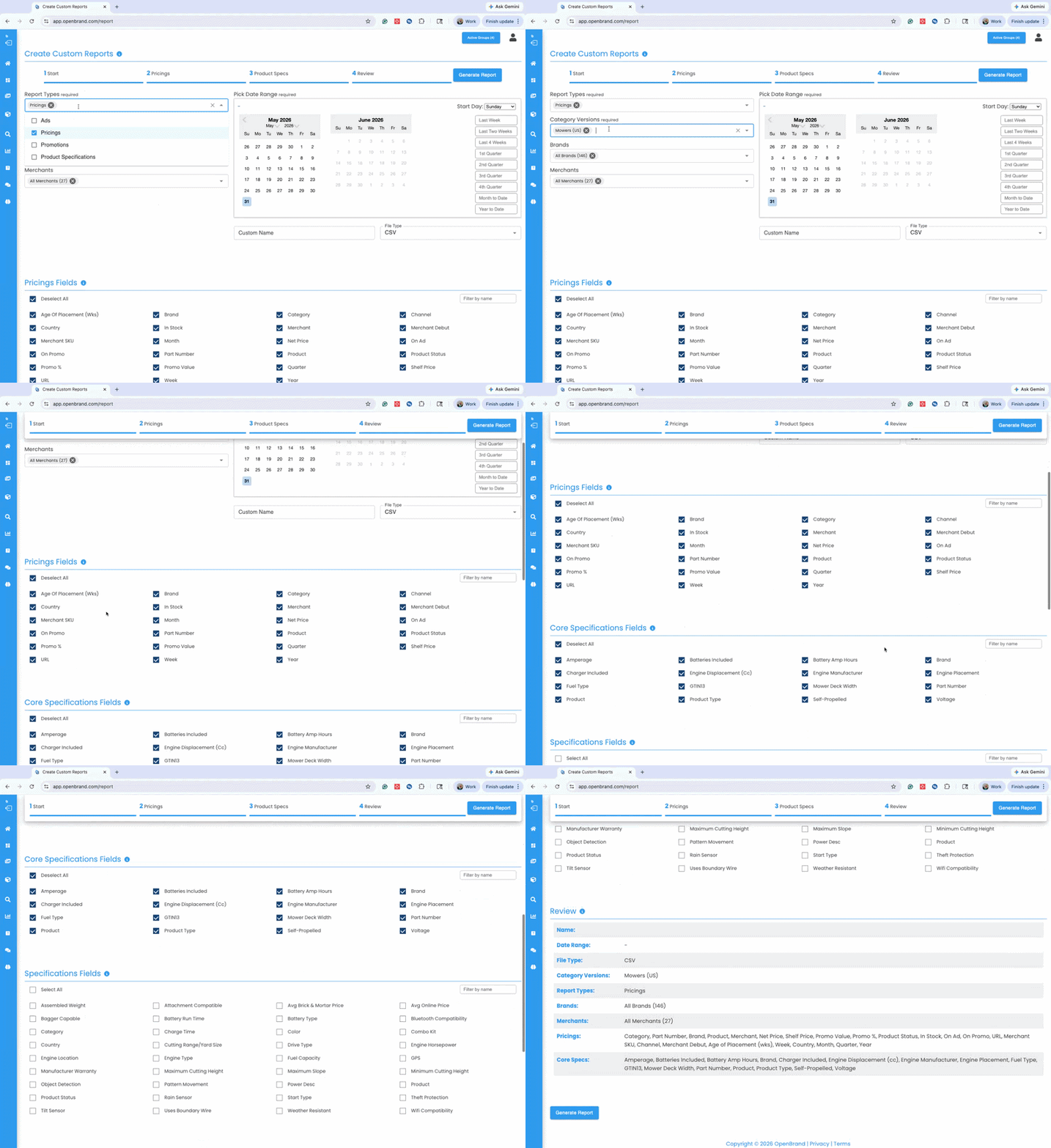
An outdoor power equipment brand, for instance, may generate a report showing when retailers began ramping up promotional activity on lawn mowers last year and whether that translated into an immediate increase in sales. This data then informs decisions about when to begin discounting this year, and by how much.
You can view promotion trends by many different views including product, SKU, brand, retailer, metric, spec, etc.
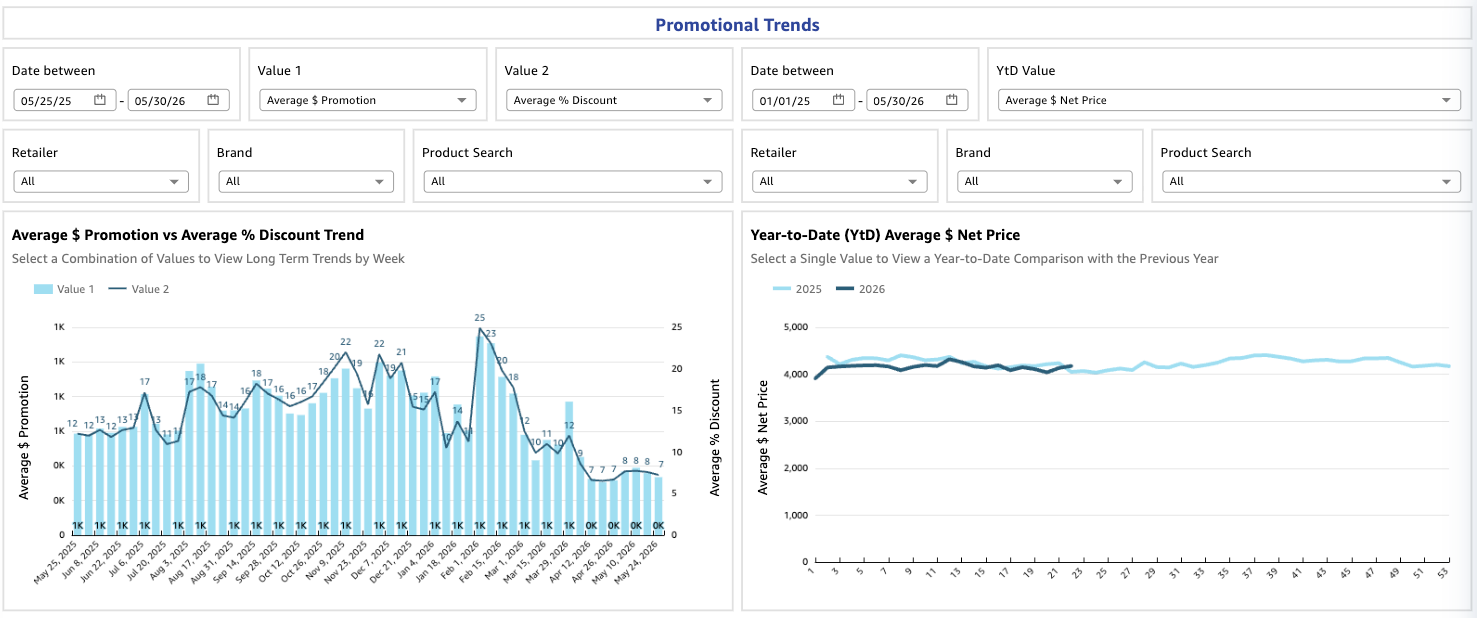
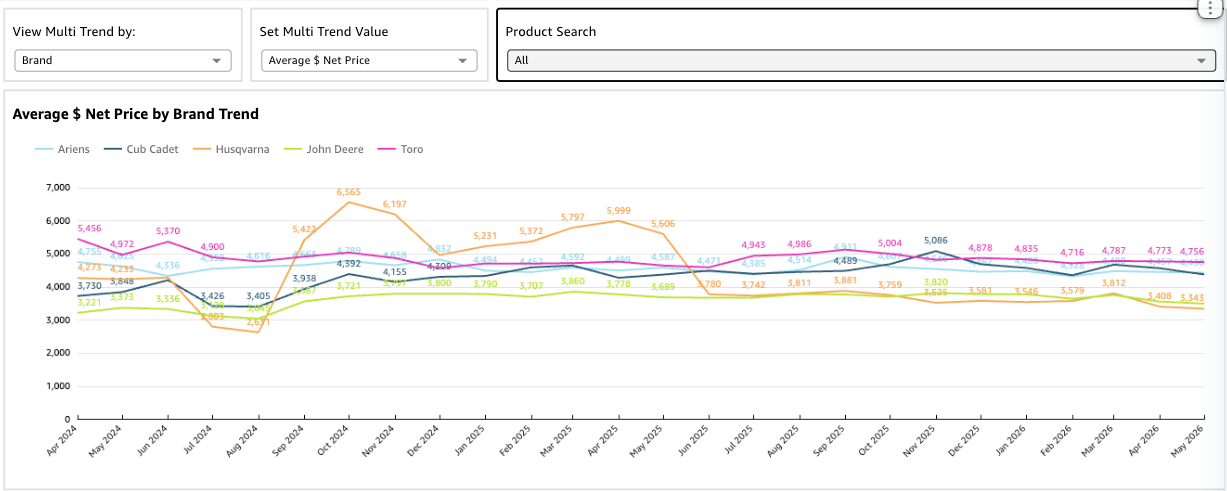
The key at this stage is to identify the why behind the what. If your competitor discounted heavily but didn’t perform well during a recent sales cycle, perhaps that’s an indication they didn’t have the right product mix. OpenBrand’s research and data help brands and retailers identify these trends.
Winning Seasonal Promotions Step Three: Act in Real Time
The goal: detect competitor moves within hours, not days, and respond while demand is still at its peak.
When seasonal promotions go live, timing is everything. During major promotional events, price changes can occur multiple times per day, and consumer demand for a particular product can spike without warning. OpenBrand’s real-time pricing intelligence helps you monitor competitor pricing and promotional activity as it happens so teams can identify shifts, respond quickly, and protect margin.
Intra-day and same-day pricing data allows retailers to detect market changes within hours rather than days and take action while demand is still at its peak. This is especially important for big-ticket durable goods like appliances and furniture, because missing one sale has a larger impact on overall revenue.
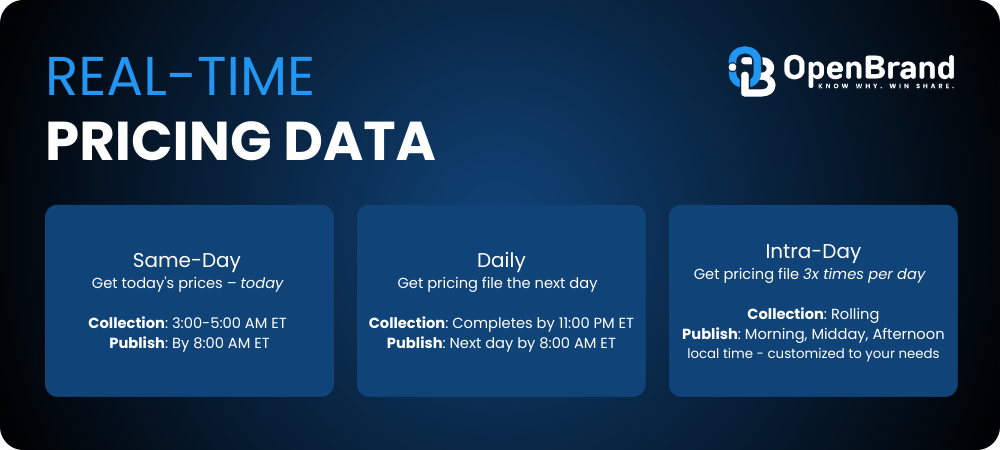
Additional signals such as key SKU availability and advertising activity also help companies better understand whether competitors’ products are in stock or being supported by additional marketing spend. Combining these inputs creates a clearer picture of market dynamics as they unfold — and gives teams what they need to make faster, more confident calls.
Winning Seasonal Promotions Step Four: Reflect
The goal: turn post-promo data into next season’s starting point, not just a performance recap.
Once the promotional period ends, OpenBrand’s tools can be put into practice to evaluate performance beyond topline sales. Use market share data to understand whether your pricing and promotional decisions helped your brand win visibility and demand during the period. Then review consumer purchase insights with MindShare to identify shifts in shopper behavior, including changes in demographics, retailer switching, or brand leakage.
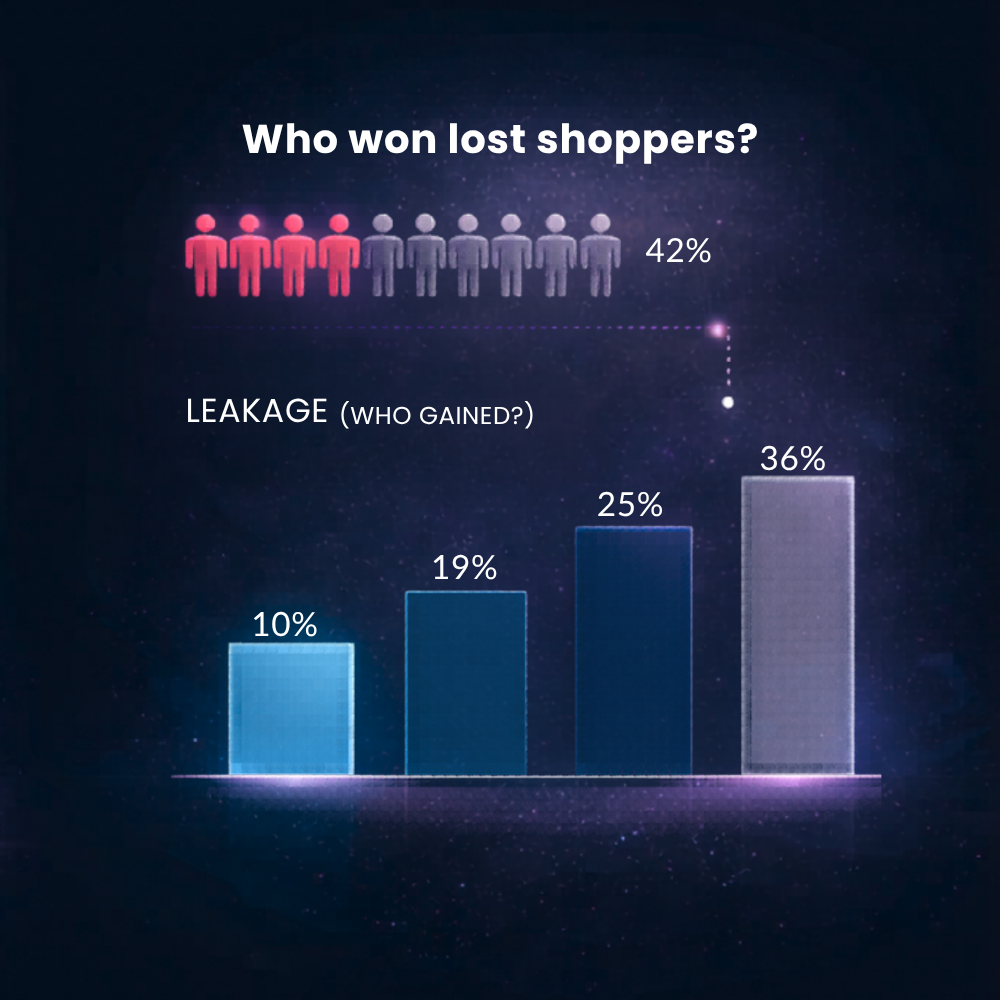
Done well, this review becomes the starting point for next season’s plan — not a post-mortem, but a playbook.
Be Prepared For Your Next Promotional Cycle
The brands that come out of peak season with better results aren’t doing something exotic. They’ve built a process — pre-season research, data analysis, real-time monitoring, post-event review — and they’re running it consistently. The data advantage compounds over time.
In an increasingly competitive retail landscape, market intelligence is no longer a nice-to-have — it’s the foundation for winning peak sales moments and driving long-term growth.
If you’re building your strategy for the upcoming season, our team can walk you through how OpenBrand’s pricing and analytics tools fit into your workflow. Request a demo and see how OpenBrand’s pricing intelligence fits into your seasonal promotional process. No pitch, just a practitioner-to-practitioner look at how the pieces connect.
FAQ
What pricing data should consumer durables brands analyze before a seasonal promotion?
Before a promotional window opens, brands should analyze competitor discount depth and frequency, promotional timing patterns, and category-level pricing distributions from the prior season. OpenBrand’s Research Library provides analyst-written category recaps and competitive pricing summaries so pricing teams can build a data-backed plan before the season starts, rather than reacting once it’s already live.
How do brands use real-time pricing intelligence during peak promotional events?
OpenBrand’s intra-day pricing intelligence tracks competitor price changes and promotional activations as they happen across retail channels, not in a next-day batch feed. For a category manager, that means seeing a competitor drop price mid-morning and responding before the afternoon traffic window closes. For consumer durables brands, where a single missed sale on a big-ticket item has an outsized revenue impact, the difference between a 6-hour lag and a 20-minute alert is often the difference between holding share and ceding it.
How do you know if a competitor’s promotion is a strategic move or a clearance event?
Not all competitive price drops are created equal. OpenBrand’s Total Market Insights filters promotional activity by product tier, channel, and time window, so pricing teams can distinguish systematic pricing strategy from one-off clearance events. Reacting to a clearance SKU as if it’s a strategic cut is one of the most common ways brands damage margin without recovering share.
What should brands review after a seasonal promotional period ends?
Post-promo analysis should go beyond topline sales. Layering market share movement with consumer purchase behavior — including retailer switching and brand leakage — gives a more complete read on whether pricing and promotional decisions actually moved the needle. OpenBrand’s MindShare data provides that consumer-level view alongside competitive market share data.
Can brands track competitor pricing and promotions across multiple retailers at once?
Yes! OpenBrand’s competitive intelligence covers pricing, promotions, products, and placement across retail channels simultaneously, with the ability to filter by SKU, brand, retailer, and date range. This is especially useful during compressed promotional windows when competitors are running activity across multiple platforms at the same time.

How Same-Day Pricing Data Helps Retailers Optimize For Key Promotional Periods
The business environment for retailers is more competitive than ever: customer acquisition costs are on the rise, supply chains and trade policy are volatile, and a larger number of brands are competing for shrinking shelf space.
Effective pricing and promotion strategies can help retailers attract new customers, drive loyalty, and generate revenue. But it takes careful planning and granular data to know exactly how to price and how much to discount.
This is particularly true during major promotional events like holiday weekend sales, Black Friday, and Amazon Prime Day, which compress weeks of revenue opportunity into a matter of hours. Even small pricing missteps can materially impact margin and market share. That’s why data that helps teams shift their pricing and inventory strategies in real time is key in today’s highly-competitive market.
What Is The Value of Same-Day Pricing Data?
Traditional data reporting cycles are too often slow to support effective decision-making during peak promotional periods. Retailers that rely on static pricing strategies risk leaving revenue on the table by over-discounting or losing traffic due to delayed responses.
During annual promotional events, competitor price changes typically happen multiple times per day, and consumer demand for a particular product can spike unpredictably. As a result, pricing strategies based on real-time data—which help retailers see price changes across the industry as they happen—are critical for making proactive decisions that protect margins and maximize volume.

Same-day pricing data unlocks visibility into competitive pricing and promotional activity, helping retailers detect market changes within hours rather than days and act while demand is still at its peak. This is key for big-ticket durable goods like appliances and furniture, because missing one sale has a larger impact on overall revenue.


During events like Black Friday, intra-day pricing, which reports prices at regular intervals throughout the day, provides even more visibility into how promotions are shifting based on demand and availability. If, for instance, an appliance retailer increases its discount on a refrigerator mid-day, its competitor gets that insight within minutes rather than waiting for the next daily collection.
Unlike reporting that summarizes pricing after the fact, same-day intelligence delivers SKU-level insights that support intra-day decision-making. This level of immediacy transforms data from a retrospective reporting tool into an operational lever that supports margin protection and competitive positioning.
OpenBrand's Real-Time Pricing Options
| Pricing Data Frequency | What it means | Collection | Published |
| Same Day Pricing | Get today's prices, today | 3 - 5 AM ET | By 8 AM ET |
| Daily Pricing | Get pricing files the next day | Completes by 11 PM ET | Next day by 8 AM ET |
| Intra-Day Pricing | Get pricing 3x times per day | Rolling | Morning, Midday, Afternoon |
How Same-Day Pricing Data Helps Retailers Optimize Discount Depth
Promotional pricing is typically planned weeks in advance, but demand during major sales events rarely follows the original forecast. Some products sell quickly with modest discounts, while others require deeper promotions to remain competitive.
Same-day pricing intelligence gives retailers SKU-level visibility into how products are priced across competing retailers throughout the day. Merchandising and pricing teams can see where competitors have introduced new discounts and how their own pricing compares within the category.
For example, if a retailer launches a promotion on a refrigerator model at 15 percent off, same-day data may reveal that competitors are discounting the same product closer to 20 percent. Teams can then decide whether to adjust the promotion, feature the product more prominently, or hold pricing steady if it remains competitive.
This visibility allows retailers to make targeted pricing adjustments rather than lowering prices broadly across a category, helping protect margins while staying competitive during fast-moving promotional events.
How Does Same-Day Pricing Data Create a Competitive Advantage?
Same-day data empowers merchandising, supply chain, and e-commerce teams to share a broad view of market conditions, enabling faster cross-functional alignment during critical promotional periods.
Teams can also plan for busy sales events in advance by establishing predefined guardrails and setting automated alerts tied to real-time market shifts. This helps turn high-risk discounting strategies into a controlled growth engine that strengthens short-term results and long-term price credibility.
How OpenBrand’s Pricing Intelligence Can Help
The ability to track, map, and monitor products across channels is a cornerstone of OpenBrand’s market intelligence solution.
Using AI-powered product matching and a combination of in-store and online data collection, OpenBrand maps equivalent products across retailers to provide a clear view of how specific SKUs are priced and promoted across the market.
For retailers that need competitive pricing aligned directly to their internal item catalogs, OpenBrand also offers a dedicated Competitor Product Matching & Price Collection service. This service produces a competitive pricing feed mapped directly to a retailer’s internal SKUs, allowing teams to integrate competitor pricing data directly into their existing pricing and merchandising workflows.
The service provides:
- SKU-matched competitive pricing feeds aligned to the retailer’s internal item master
- Competitor price observations, including shelf price, net price, and derived instant savings
- Availability signals indicating whether the product is currently in stock
- Traceable identifiers, including retailer SKU, competitor URL or merchant SKU, and GTIN or model number when available
- Flexible delivery options, depending on how you want to ingest the data
By combining same-day competitive intelligence with SKU-level price matching, OpenBrand helps retailers move beyond manual monitoring and build faster, more responsive pricing strategies during high-stakes promotional events.
Request Your Free Same Day Pricing Match
Seeing is acting. Submit your details, and we’ll be in touch to begin your pricing match file.
Find Your Winning Segments With MindShare + Claritas PRIZM® Premier
OpenBrand added Claritas PRIZM® Premier segmentation to their MindShare consumer insights solution, which delivers insights from the longest-running durables consumer tracking survey. This allows you to connect “who’s moving” in the market to “who they really are” – and then activate those audiences across media with precision.
MindShare captures what, where, and why people buy durables. PRIZM Premier shows who they are and how to reach them. Together, they close the insight-to-action gap without extra tools or manual mapping.
If you are new to MindShare or PRIZM Premier, here is exactly what you gain when you use them together.
What you get when you combine MindShare + PRIZM® Premier
- See the segments for the whole category and your brand. PRIZM coding is applied across the entire category in MindShare. Tie brand momentum, consideration, and purchase intent to PRIZM Premier lifestyles at a zip+4 level of granularity to understand which households are moving — and why.
- Activate in one step. Push selected PRIZM Premier audiences into Claritas-powered channels (programmatic, social, streaming/CTV, direct mail, mobile) to reduce waste and raise relevance.
- Prove impact where it matters. Track lift by PRIZM Premier segment (not just at the national level) so you can reallocate budget with confidence.
Now let’s turn those benefits into real work your team can do this quarter.
High-value use cases
-
- Hyper-targeted brand awareness: Match rising consumer-reported mind share to PRIZM® segments and activate only those households to reduce waste and raise relevance.
- Competitive conquest: Find segments where a rival over-indexes and build switcher programs that target those groups.
- Segment-level lift measurement: Quarterly updates show brand and ad-recall change by PRIZM segment so you adjust creative and budgets with evidence, not averages.
- Creative personalization at scale: Blend MindShare insights with PRIZM psychographics to craft messages that match values, life stage, and media habits.
- Push button activation: With a single click, marketers can activate Claritas audiences across integrated platforms (DSPs, social, CTV, direct mail, email, etc.), eliminating the lag between audience discovery and execution.
By using both products, you get the what, where, and why tied to the who and how to reach them, along with a repeatable quarterly loop to track your marketing campaigns.
Here’s what that looks like in practice, using an anonymized retailer example.
Regional Retailer Example: Tires
A Mountain West DMA showed a gap in performance for tire share. PRIZM Premier pinpointed which lifestyle segments drive most of the category’s performance: tire demand. Since coding is category-wide, this read works for any regional or national tire retailer in the market.
What the data shows
- MindShare surfaced a DMA-level shortfall in performance around tire consideration and intent.
- PRIZM identified the segments responsible for the bulk of performance: tire purchases in that DMA, for example, Middleburg Managers, Big Sky Families, Country Strong, Country Casuals.
How to act this quarter
- Prioritize those four segments for creative and offers that match their motivations, for example premium grip and handling for Middleburg Managers, safety and versatility for Big Sky Families.
- Use geo-targeted media and local events in ZIP codes where these segments cluster.
- Build retailer-specific landing pages that speak to segment values and feature needs.
What to watch next
- Segment-level lift in intent and store visits, redemption rates on segment-targeted offers, and revenue per ZIP code across the targeted clusters.
Why it matters
Focusing budget on the top segments and DMAs turns a small share gap into measurable revenue within a quarter, with a clear playbook to scale into adjacent markets.
The same approach extends beyond one DMA or category. Here are other ways to mine segment insights at scale.
How to Generate More Insights
By retailer
- Identify which PRIZM segments drive consideration or intent at Retailer A versus Retailer B. Where competitors over-index and where you have headroom.
- So what: Build retailer-specific conquest or co-op plans that target the right lifestyles.
By price tier
- Which segments disproportionately choose premium, mid, or value, and how willingness to pay varies by lifestyle.
- So what: Shift mix and offers to the tiers each segment will actually buy.
By product type
- Segment preferences across subcategories, for example front-load versus top-load, gas versus electric, corded versus battery.
- So what: Aim product development and merchandising where segment demand is rising.
By spec or feature
- Which segments over-index for features like smart connectivity, counter-depth, brushless motors, or quiet operation, and how those tie to media habits.
- So what: Match creative and channel to the features that convert each lifestyle.
Find the Segments That Will Move Your Share
MindShare plus PRIZM reveals the few audiences that matter most, across the whole category, and shows how to reach them. PRIZM® Premier coding is available as an add-on for MindShare subscribers.
Request a demo today to review your category and priority retailers, then map the next-quarter plan.

Prime Day Insights: How Durable Goods Shoppers Differ from CPG
Why durable-goods brands need purpose-built data (and what happens when you don’t).
You’ve probably seen the big, splashy Prime-Day recaps:
“Half of shoppers said the discounts were just… fine.”
“Only one in ten walked away disappointed.”
Those numbers are technically true for all Amazon shoppers. But “all” includes those shoppers stuffing their carts with protein shakes, household items and home decor. If you sell cordless drills or countertop ovens, that data can steer you straight out of your next sale.
What durable-goods shoppers actually told us
OpenBrand ran the only Prime-Day survey focused solely on consumer-durable buyers.
Here’s how their experience stacked up during Prime Day:
| Responses | Durables Buyers | Non-Durables Buyers |
| Discounts exceeded expectations | 48.6% | 15.9% |
| Selection exceeded expectations | 46.5% | 19.7% |
| Discounts “Just met expectations” | 45.0% | 70.5% |
| Selection “Just met expectations” | 45.6% | 63.6% |
| Flat-out disappointed on selection or discounts | ~5% | 13% – 17% |
Three critical truths
- Durables shoppers were thrilled. About half of durable-goods buyers said discounts and selection beat the hype (48.6% and 46.5%).
- CPG shoppers were meh. Roughly seven in ten non-durable shoppers settled for ‘just met expectations’ (70.5% for discounts, 63.6% for selection).
- Complaints plummeted for durables. Non-durable buyers were nearly three times as likely to feel disappointed (13-17% vs. ~5 %).
Source: OpenBrand Prime Week Survey Tracker. More information on the survey methodology can be found here.
Why the gap exists
1) Category & Industry specific beats one-size-fits-all. Our platform was engineered specifically to track the behavior of durable goods. Why? Because the buying behaviors are different – longer consideration cycles, higher perceived risk, and bigger baskets. Systems tuned for pantry fill-ups simply miss those signals and nuance.
2) Bigger isn’t always better. Bringing an 800-pound data gorilla into your business sounds impressive, right up until you’re stuck feeding it insights you can’t act on. Depth of focus beats raw bulk every time.
3) Mix the two audiences and you bend reality. When CPG and durables data get averaged together, the strong positives from big-ticket shoppers flatten into mediocrity. That’s why generic Prime-Day stats don’t just blur the picture, they warp it.
The moral for durable-goods brands & retailers
- If you want to know how many people buying hydration powder felt “okay” about discounts, stick with the reports that are not tailored to your buyer.
- If you want to know that durable-goods buyers were more than twice as likely to say Amazon’s deals blew them away—and far less likely to be disappointed—come to the source built for your category.
OpenBrand spends 100% of our time collecting and analyzing the signals that move your margin, not the guys hawking powdered drink mixes.
OpenBrand Prime Day 2025 Survey Methodology Overview
Survey Structure and Timing
OpenBrand conducted three distinct consumer surveys to capture attitudes, behaviors, and comparisons over time across stages of the shopping journey surrounding Amazon Prime Day 2025:
- Pre–Prime Day Survey (n=725)
Fielded: July 2 – July 7, 2025
Purpose: Gauge planned participation, expectations, and awareness of Prime Day promotions - During–Prime Day Survey (n=700)
Fielded: July 8 – July 11, 2025
Purpose: Capture real-time reactions, purchases, frustrations, and ad exposure during the sales event - Post–Prime Day Survey (n=700)
Fielded: July 12 – July 17, 2025
Purpose: Understand downstream purchasing, satisfaction, returns, and follow-on intent
All surveys were fielded online using our MindShare proprietary panel syndication process. Respondents were a random sampling of U.S. adults (18+) screened for awareness of Amazon Prime Day 2025.
Sample Composition
- Total Sample Size: 2,125
- Sample Stratification: Each wave analyzed separately and in aggregate for trend validation
Durable vs. Non-Durable Shopper Classification
Respondents were classified based on the types of products they reported shopping for or purchasing:
Durable Goods Categories:
- Appliances
- Electronics
- Tools & Equipment
- Home Goods (e.g., storage, décor, furniture)
Non-Durable Categories:
- All other
Respondents could be included in both groups if they shopped across categories. However, segment-specific insights are based on exclusive or majority-category behaviors.


How to Leverage Competitive Pricing Intelligence to Stay Ahead Market Volatility
Introduction: Why Competitive Pricing Intelligence Matters in an Uncertain Market
For brands and retailers in the durable goods sector—including consumer electronics, major and small appliances, and office equipment—pricing decisions are more complex than ever. With unexpected pricing shifts for key components, fluctuating supply chain costs, and evolving consumer demand, companies must react quickly to maintain profitability and market share.
Unlike fast-moving consumer packaged goods, durable products have longer purchase cycles, higher price points, and greater sensitivity to external cost pressures. As a result, competitive pricing intelligence is critical for brands and retailers to anticipate market-driven price shifts and make proactive, data-driven decisions.
In this article, we’ll break down five key pricing signals to monitor, the actions to take based on the data, and who in your organization should act on these insights to stay ahead in a volatile market.
What Pricing Data Can Tell You—and What to Do About It
1. Sudden Price Increases in Key Product Categories
What to Watch:
- Sharp price jumps across specific categories or SKUs that have import-reliant components or raw materials, such as appliances, consumer electronics, and office equipment.
- Competitor pricing adjustments occur before key market events go into effect.
What to Do:
- Act preemptively: If competitors are raising prices in anticipation of market changes, review supplier agreements and adjust inventory orders before costs escalate.
- Assess component-level exposure: Many durable goods rely on imported semiconductors, steel, aluminum, and plastic resins—factor these costs into pricing decisions.
- Strategically time price adjustments: Instead of sudden spikes, test phased increases or bundling strategies to maintain sales volume.
- Understanding different promotion types, including bundles, can give you insights into various pricing strategies outside of hard-shelf price cuts.
Who Should Act on This?
- Product Managers & Pricing Analysts → Monitor real-time competitor pricing fluctuations.
- Competitive Intelligence Teams → Adjust pricing and promotional plans based on cost forecasts.
- Supply Chain & Sales Teams → Negotiate contracts before market conditions impact costs.
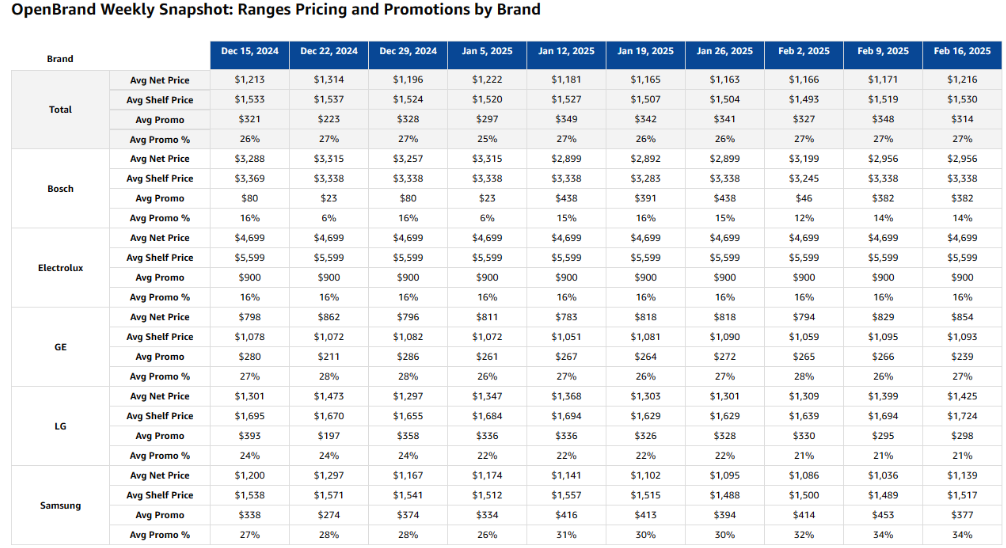
2. Competitor Promotional Activity as a Cost-Absorption Strategy
What to Watch:
- More aggressive discounting on high-margin durable goods (e.g., home appliances, large electronics) indicating competitors are absorbing costs rather than passing them to consumers.
- Fewer promotions or shallower discounts signaling that competitors are struggling with rising costs and protecting their margins.
What to Do:
- Re-evaluate promotions: If competitors are still discounting despite rising costs, determine if matching these promotions is sustainable.
- Monitor elasticity trends: Durable goods have longer purchase cycles. For example, major appliances remain in the brick-and-mortar channel for 3 years on average. Track how price-sensitive customers are before adjusting your strategy.
- Shift promotional messaging: Instead of discounting deeply, emphasize warranty extensions, retailer loyalty programs with key retailers, financing options, or value-added services to maintain demand.
Who Should Act on This?
- Sales Team & Buyers → Track competitor pricing trends and adjust strategies to balance volume and margins. Work with trade partners to stay competitive without unnecessary discounting.
- Trade & Promotions Managers → Optimize promotional spend based on competitive behavior.
- Channel Marketing & Brand Teams → Adjust campaign and promotional plans to compete without eroding margin.

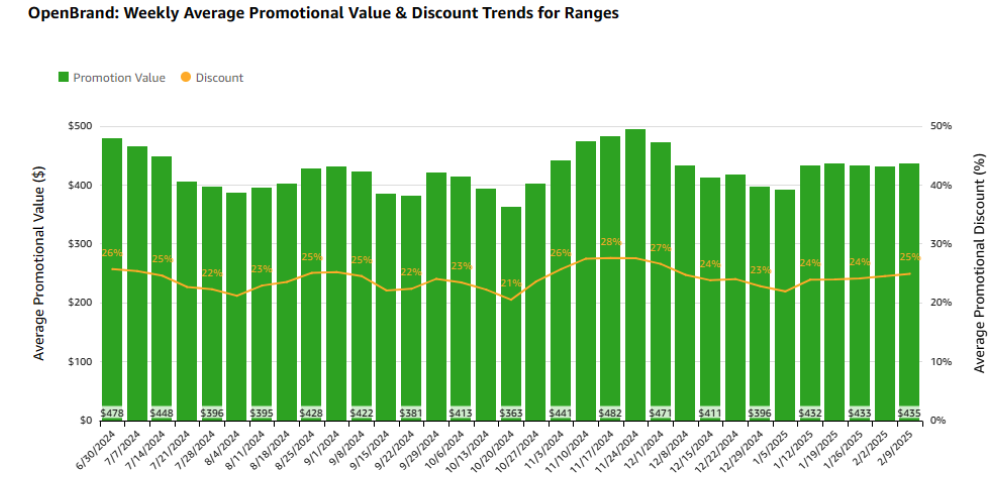
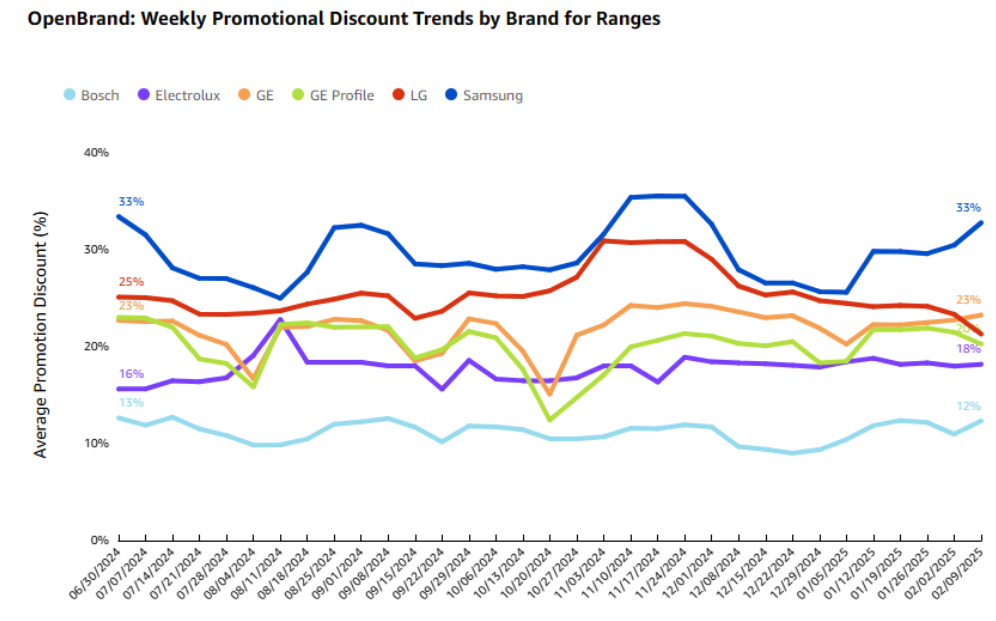
3. Retailer-Supplier Price Divergences
What to Watch:
- If retailer prices rise faster than manufacturer’s suggested retail prices (MSRP), it may indicate that retailers are anticipating higher costs or tightening margins.
- If some retailers hold prices steady while others increase them, there may be an opportunity to gain market share with competitive pricing.
What to Do:
- Ensure channel-wide price consistency: If some retailers are holding prices steady while others increase them, re-align pricing strategy to prevent undercutting.
- Negotiate with key retail partners: Ensure pricing integrity across wholesale and DTC channels to prevent profit dilution.
- Monitor price floors: If certain retailers undercut MAP pricing, reevaluate distribution agreements to maintain value perception.
Who Should Act on This?
- Retail Buyers & Category Managers → Identify price discrepancies across retail partners.
- Sales & Key Account Managers (for manufacturers/brands) → Work with retailers to maintain price consistency.
- Product Managers → Adjust forecasts based on wholesale vs. retail pricing trends

4. Channel-Based Price Variability
What to Watch:
- Price differences between online marketplaces and in-store retail.
- Retailers adjusting pricing inconsistently across regions or fulfillment centers.
What to Do:
- Adjust direct-to-consumer (DTC) pricing based on marketplace trends: If resellers undercut brand-owned channels, adjust pricing or offer exclusive bundles to drive DTC sales.
- Optimize omnichannel strategy: Track SKU inventory and strategically shift inventory to maximize profitability in higher-margin markets.
- Enforce MAP pricing: For durable goods brands, protecting value perception is critical—monitor and address unauthorized price cutting.
Who Should Act on This?
- Retail Buyers & Category Managers → Identify which brands or products are experiencing price discrepancies across retailers.
- Sales & Key Account Managers (for manufacturers/brands) → Work with retailers to ensure consistent pricing and prevent channel conflict.
- Pricing Strategy & Analyst Teams → Adjust regional pricing strategies based on demand elasticity.
- GTM and Sales Ops Teams → Enforcing and maintaining pricing strategies.

5. Consumer Price Elasticity and Competitive Response
What to Watch:
- If competitors raise prices but maintains market share, customers may be less price-sensitive, giving you room to adjust.
- If a competitor raises prices and market share drops, the market may be hitting a price ceiling.
What To Do:
- Test gradual price increases: Instead of sharp hikes, experiment with incremental adjustments and monitor conversion rates.
- Monitor brand perception: If competitors lose market share after raising prices, position yourself as the best-value alternative.
Who Should Act on This?
- Pricing Teams → Determine optimal price points based on consumer demand.
- Customer Insights Teams → Understand how price changes impact buying decisions.
- Sales & Product Managers (for manufacturers/brands) → Collaborate and adapt sales strategies based on consumer price sensitivity.
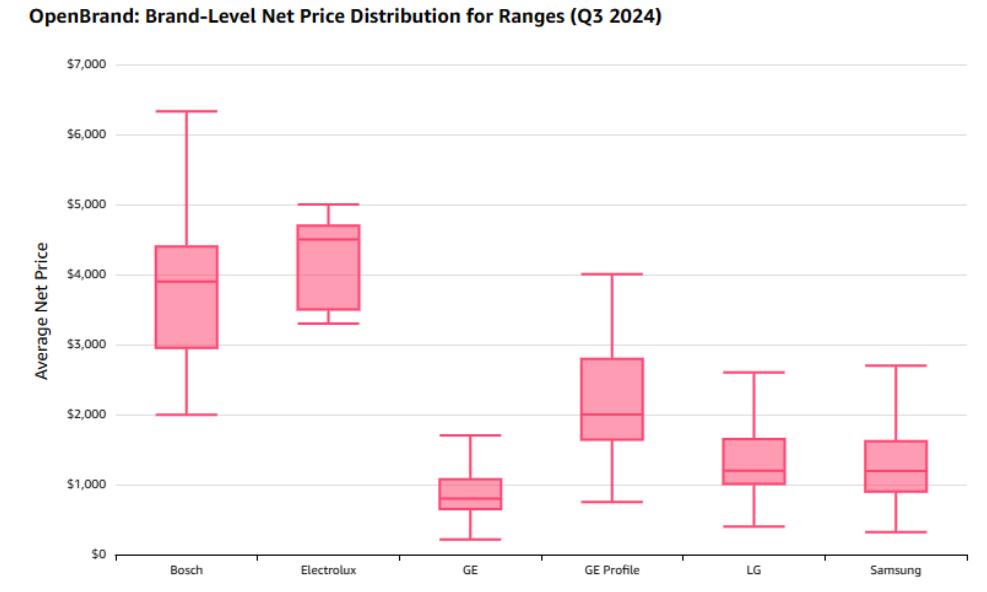
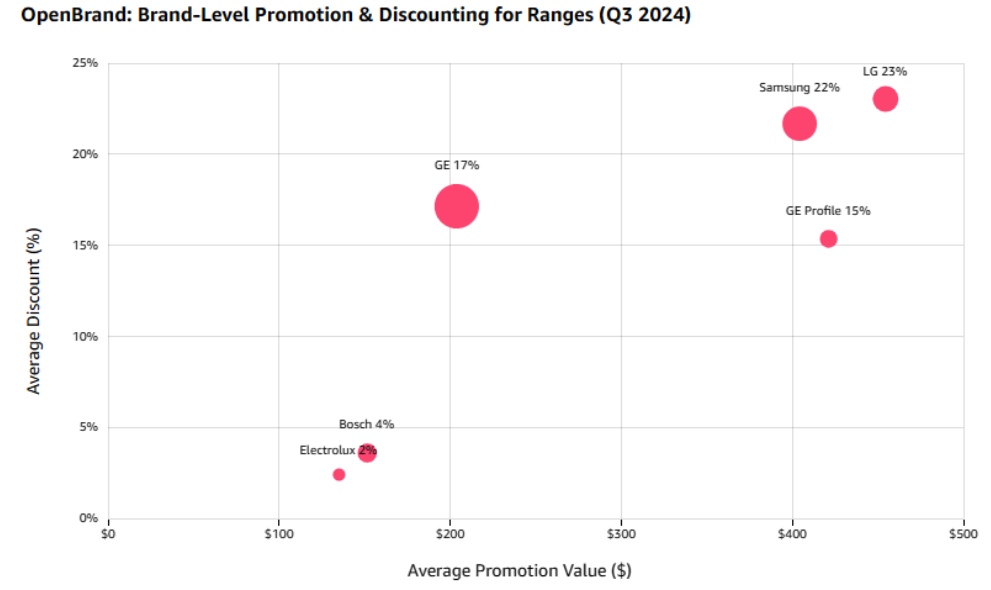
How OpenBrand’s Competitive Pricing Intelligence Can Help
At OpenBrand, our Competitive Intelligence product provides:
✔ Daily and same-day SKU-level price tracking across online and in-store channels
✔ Promotional activity insights to understand cost-absorption trends
✔ Competitor pricing benchmarks to spot industry-wide shifts
✔ Key SKU availability to monitor inventory by region and retailer
✔ Multi-level pricing insights to see pricing, inventory, and promotional details from a brand-to-SKU level
Pricing data provides a real-time view of market movements, competitive strategies, and emerging trends. To take it one step further, we recommend combining competitive intelligence with market measurement to give you a holistic view. Our customers use Market Measurement to monitor share, track competitive shifts, and uncover how their customers behave and why
By layering these insights, businesses can anticipate pricing thresholds, optimize promotions, and adjust inventory strategies based on market dynamics and consumer behavior. This holistic approach allows brands to make proactive, not reactive, decisions—aligning pricing strategies with actual demand to maximize revenue and market share.
Want to see how OpenBrand can help you track daily price movements and outmaneuver the competition? Request a demo today.
About the Author