




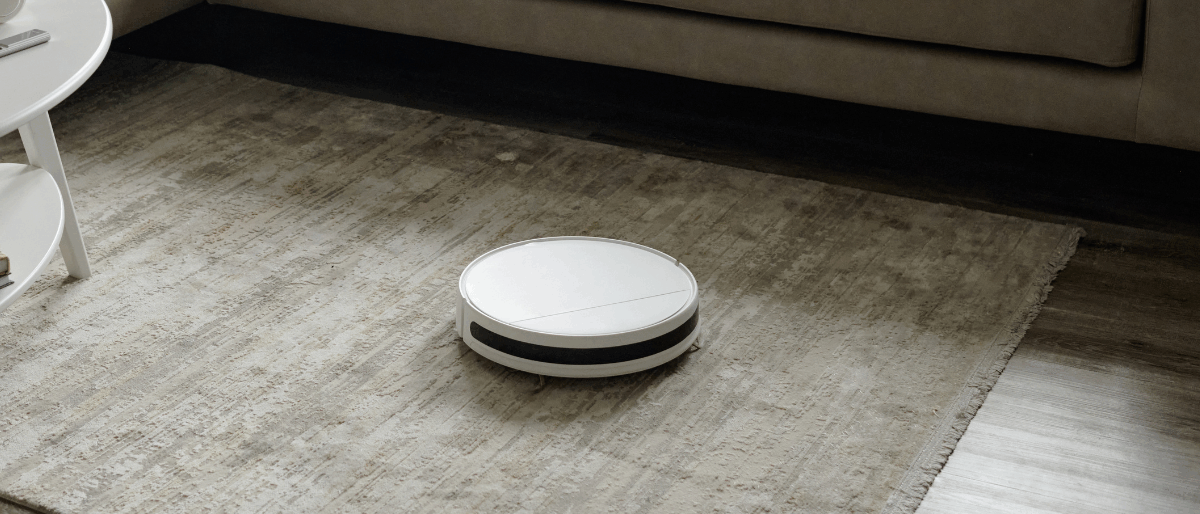


Our Floor Care (Vacuums): 2025 Year-in-Review report recaps Vacuum launches, placements, pricing and advertising and promotional activity captured throughout 2025. The report features data and insights from OpenBrand’s Floor Care category, which feature products sold through the US ecommerce and brick-and-mortar channels.
Read through all the 2025 pricing and promotions insights below or email the report to read later.
You can also check out our 2025 Year-in-Review reports for other Home Appliance categories.
Floor Care Market: 2025 Product Updates
The US floor care industry entered 2025 with innovation cycles accelerating across nearly all major segments, driven by rising competition and a steadily expanding pool of international and emerging brands. Increased pressure from these manufacturers shortened product lifecycles and raised baseline expectations for automation, performance, and convenience. Brands were no longer competing solely on incremental upgrades but on how quickly they could introduce new capabilities that aligned with evolving consumer standards and shifting definitions of value.
Much of this acceleration can be traced back to structural changes that began earlier in the decade, particularly the expansion of e-commerce marketplaces. Platforms such as Amazon and Walmart lowered barriers to entry, allowing international brands to establish US credibility without relying on traditional brick-and-mortar distribution. These channels streamlined logistics, reduced upfront risk, and enabled rapid brand building, with successful online brands later expanding into physical retail. By 2024, this shift was clearly visible, with brands such as Dreame and Roborock securing placements at Target and Best Buy. Momentum continued in 2025 as channel access expanded further, including the launch of Best Buy’s marketplace in August, creating additional pathways for brands and sub-brands to scale their presence.
As access widened, competition intensified across both online and in-store environments, increasing pressure on incumbent manufacturers to defend share. Against this backdrop, portfolio diversification emerged as an executional necessity rather than a growth experiment. Broader portfolios allowed brands to absorb pressure within individual segments, while narrower portfolios increased exposure to demand volatility and faster-moving innovation standards. These conditions set the foundation for the strategic decisions and market outcomes that defined the floor care industry throughout 2025.
Impact Summary
- Competition accelerated innovation cycles across floor care segments
- Portfolio breadth proved critical as pricing and demand pressures rose
- Multifunctionality may shape premium floor care innovation heading into 2026
- Portfolio Diversification as a Competitive Playbook
As innovation cycles compressed, portfolio diversification functioned as a core competitive strategy rather than a reactive response. Brands with exposure across multiple categories were better positioned to manage volatility, balance pricing pressure, and sustain relevance as expectations rose and differentiation windows narrowed. In contrast, brands concentrated in fewer segments faced heightened risk when individual categories slowed or innovation standards reset.
SharkNinja remains one of the clearest examples of diversification executed at scale. Expansion into new product categories has long been a stated growth pillar for the company, alongside increasing market share in existing segments and expanding its international footprint. Within floor care, this strategy translated into sustained investment across robotics, uprights, stick vacuums, floor washers, and carpet cleaners. Rather than relying on strength in a single category, Shark consistently leveraged brand equity and engineering capabilities to expand adjacently, allowing the company to remain resilient despite intensifying competition from both legacy and emerging brands.
International brands followed a similar playbook, often entering the US through technology-forward categories before expanding outward. Roborock’s trajectory highlights this approach. After establishing a strong robotic vacuum business and expanding into floor washers, the brand announced its return to the stick vacuum segment in mid-2025 with the H60 series. The re-entry followed earlier exits from the category and reflected confidence built through success in adjacent segments. By introducing auto-empty functionality into its stick lineup, Roborock extended automation-driven features beyond robotics and aligned its portfolio more closely with broader category expectations. Across the market, diversification increasingly determined which brands could sustain momentum as innovation cycles accelerated.

Vacuum Market: Accelerating Innovation Cycles
Innovation across floor care accelerated further in 2025, delivering gains in automation, hygiene, and cleaning performance across multiple product types. Advances in wet and dry integration, maintenance automation, suction power, surface detection, and navigation raised performance baselines while compressing acceptable timelines for feature adoption. As a result, brands faced growing pressure to keep pace with rapidly evolving standards rather than relying on prior leadership positions.
These conditions placed heightened strain on brands with limited portfolios, particularly those concentrated in discretionary categories. iRobot’s experience during 2025 illustrates how faster innovation cycles and softer consumer demand can compound structural weaknesses. With a portfolio focused exclusively on robotic floor care, the brand remained exposed to a segment more sensitive to economic pressure than traditional vacuum categories.

Following the termination of its proposed acquisition by Amazon in early 2024, iRobot entered 2025 amid a turnaround effort centered on preserving the Roomba brand and realigning its product strategy with faster innovation cycles. Under new leadership, the company launched its largest portfolio refresh to date, introducing eight new robotic vacuum and mop models that incorporated LiDAR-based navigation, dual spinning mop pads, ultrasonic carpet detection, and expanded self-cleaning dock functionality. While these updates brought iRobot closer to prevailing segment standards, they also underscored how little margin remained for delayed feature adoption as innovation cycles continued to compress. Financial pressure persisted throughout the year, ultimately leading iRobot to file for Chapter 11 restructuring in December 2025 and agree to an acquisition by its primary contract manufacturer, PICEA. The outcome highlighted the risks associated with limited portfolio exposure in a market where innovation standards reset annually.
The broader market demonstrated how quickly new technologies now move from differentiation to expectation. Continuous self-cleaning roller mop systems provide a clear example. First introduced in mid-2024 with Eufy’s S1 Pro Omni, the format gained visibility at CES 2025 as brands such as Narwal and ECOVACS showcased competing implementations. By the end of 2025, the feature had moved toward near-standard inclusion among premium robotic vacuums, with most major players either implementing it or announcing upcoming flagships. Roborock stood out as one of the last major brands yet to adopt the format, with its Qrevo Curv 2 Flow expected to debut at CES 2026, reinforcing how quickly innovation expectations now propagate across the market.

Vacuum Pricing Pressure & Tariff Impacts
While innovation cycles defined much of the competitive landscape in 2025, the rollout of US tariffs introduced an additional layer of pressure that influenced pricing behavior and consumer demand. As costs rose, brands were forced to balance margin protection against demand sensitivity, particularly as broader economic uncertainty pushed consumers away from discretionary purchases such as robotic floor care.
Pricing impacts were not evenly distributed across the market. The robotic segment remained comparatively insulated from direct price inflation, as brands worked to remain competitive in a category already facing softer demand and rapid feature turnover. In contrast, price increases were more visible across non-robotic categories, including uprights, stick vacuums, and wet and dry cleaners, where manufacturers had greater flexibility to adjust pricing without materially altering purchase intent.
Emerging international brands largely avoided tariff-driven price increases despite manufacturing exposure in China. Strong international revenue bases and higher-margin premium positioning likely allowed these brands to offset US cost pressure elsewhere, further limiting the ability of legacy robotic-focused brands to raise prices without losing share. Among established manufacturers, Shark was the earliest and most aggressive responder, announcing tariff-related pricing actions during its Q1 2025 earnings call and implementing broad increases beginning in the second quarter, followed by additional increases later in the year. Other brands adopted more gradual approaches. Tineco introduced selective and fluid adjustments, while Dyson delayed its first tariff-related price increases until August, followed by further increases in September. Hoover and Dirt Devil also began adjusting prices in late summer, while Bissell stood out for maintaining largely stable pricing throughout the year. Unlike other industries, most floor care brands delayed widespread pricing changes until late summer, reflecting the category’s competitive intensity and sensitivity to demand.

2026 Vacuum Market Outlook
Looking ahead to 2026, attention is shifting toward how brands translate accelerated innovation into solutions that deliver practical value rather than incremental complexity. Developments late in 2025 point toward a potential next phase of competition centered on broader functionality across surface types and use cases. While still emerging, this direction mirrors trends seen across other premium small appliance categories, where multifunctionality has gained traction as a way to reduce device count and improve convenience.
The floor washer segment offers an early signal of how this evolution may unfold. Traditionally positioned for hard floors only, the category has required separate devices for carpeted areas, limiting adoption in mixed-surface homes. Dreame’s H15 Pro CarpetFlex, introduced ahead of IFA 2025, addresses this limitation by enabling hard floor mopping and carpet vacuuming through interchangeable brush heads with automatic mode detection. The approach reflects growing interest in reducing friction between adjacent cleaning tasks rather than treating them as isolated categories. Similar thinking is evident in products such as Shark’s late-2025 EveryMess, which combines portable wet and dry shopvac functionality and stain cleaning capabilities.
Multifunctionality is also beginning to surface within robotic floor care. At CES 2026, Robotin is showcasing a robotic model designed to vacuum, mop, and clean carpets within a single platform. While early and supported through a Kickstarter-funded development model, the concept reflects interest in expanding robotic systems beyond maintenance cleaning and toward broader surface coverage. Execution risks remain high, and not all multifunctional concepts will scale. If implemented effectively, however, these approaches may support adoption in newer segments such as wet and dry floor washers and hybrid carpet cleaners. Success in 2026 will depend less on feature count and more on whether consolidation meaningfully improves cleaning outcomes in increasingly complex home environments.
Get more information
Visit our Consumer Durables industry page to learn more about the data we deliver for the Floor Care market – or reach out to our analyst below to ask questions about this report or get specific insights you need.
About the Analyst
