



Insights from OpenBrand’s Q2 State of Durables Macroeconomic Update
While the economic outlook for 2026 remains broadly positive, the recent oil price shock has introduced fresh uncertainty. Rising energy costs have added pressure across both supply chains and household budgets, tempering expectations for a full post-tariff recovery this year.
The consumer durables market sits at the center of this tension. On one hand, pent-up demand, improving supply chains, and expectations for a housing market rebound could support a solid year for products like appliances and electronics. But higher input costs and shifting consumer priorities may begin to weigh on purchasing behavior as energy prices remain elevated.
As the broader economy continues to show mixed signals, the strength of consumer demand will depend on how quickly stability returns to energy markets and how inflationary pressures are contained. In this environment, brands and retailers will have to continue to adapt to unpredictable supply chains and adjust pricing as consumers grow increasingly pessimistic about the state of the economy.
In our latest State of Durables macroeconomic update, OpenBrand CEO Greg Munves and I broke down our latest insights across macroeconomic indicators including inflation, consumer sentiment, and more. Watch the full episode above or read on for more insights.
Inflation in Durables
Data tracked by OpenBrand showed that price growth across consumer durable goods rose modestly in March, with a month-over-month increase of +0.43%, a slight uptick from February. While there has been some speculation that inflation would accelerate more significantly in March due to spiking oil prices, some of the muted rise could have been due to a barrage of discounting events at the end of the month, led by Amazon.
The US is a net energy exporter—meaning that it doesn’t depend on other countries for its energy supply—which may help shelter the American economy from the worst of the 2026 oil shock. That said, gas prices have risen significantly in recent weeks, weighing on household budgets. And producers pay transportation, shipping, and logistics costs that are directly impacted by higher energy costs and can trickle into consumer prices.
In the months ahead, we’re watching to see whether the energy shock is a short-lived hit or a prolonged macroeconomic headwind. That will impact retailer pricing and promotion decisions this summer, as well as whether consumers tighten their spending or trade down to more affordable options.
GDP Impact on Durables
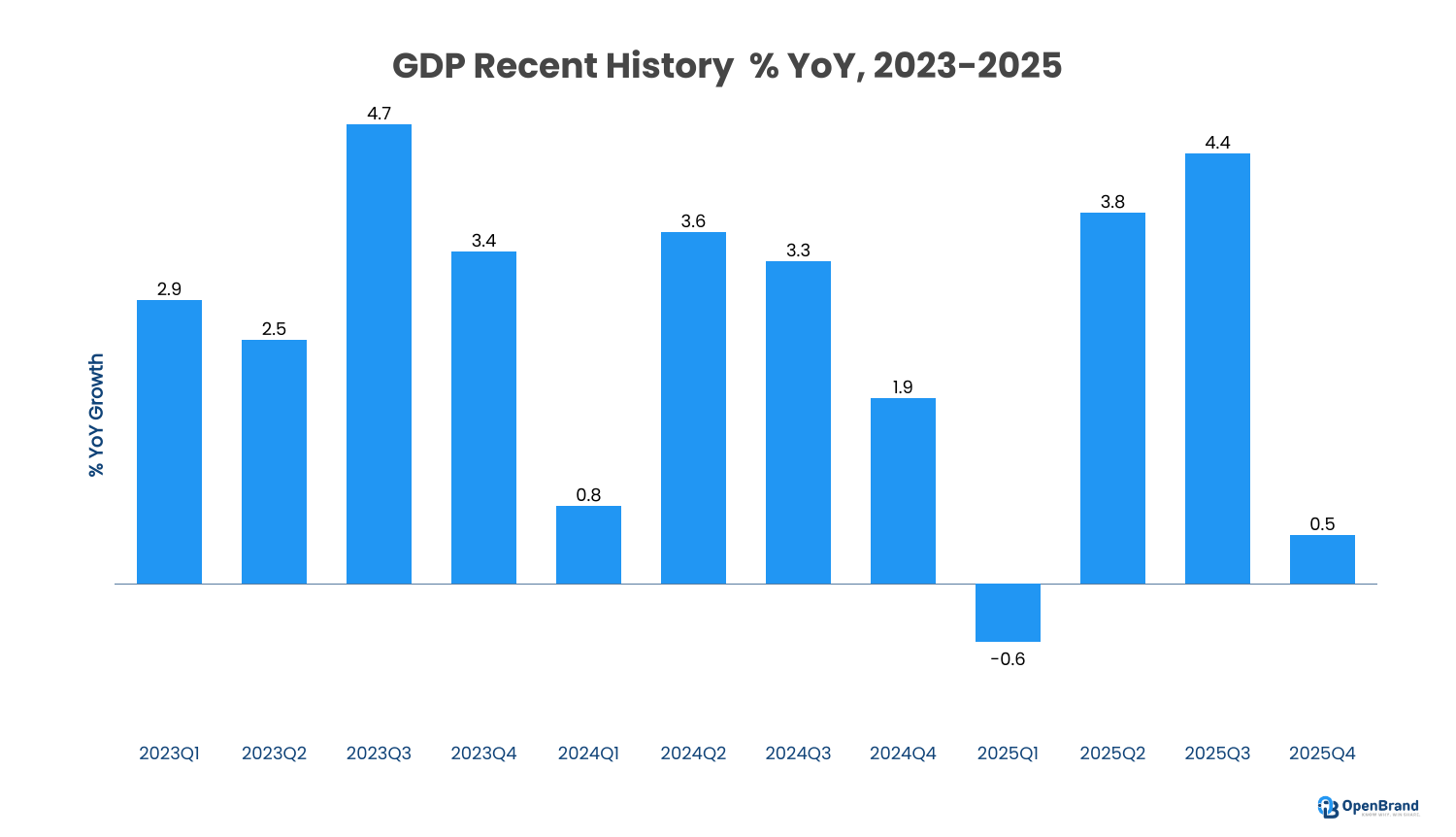
The government shutdown at the end of the year negatively impacted overall economic growth, though we expect that impact to be short-lived, with a rebound in the first and second quarters of this year. In addition to the government reopening in mid-November, the One Big Beautiful Bill Act may also act as a stimulus as a result of Americans receiving larger-than-usual tax refunds.
Consumers often use tax refunds or other bonuses to make long-awaited home improvements. As Greg noted in the discussion: What better way to spend your refund from the government than on a new refrigerator or oven?
Labor Market
Slow job growth in January and February of this year, in addition to revisions to 2025 data that put net job growth close to zero, created some pessimism when it comes to the US labor market. In March, however, payrolls increased by over 170,000, according to data from the Bureau of Labor Statistics.
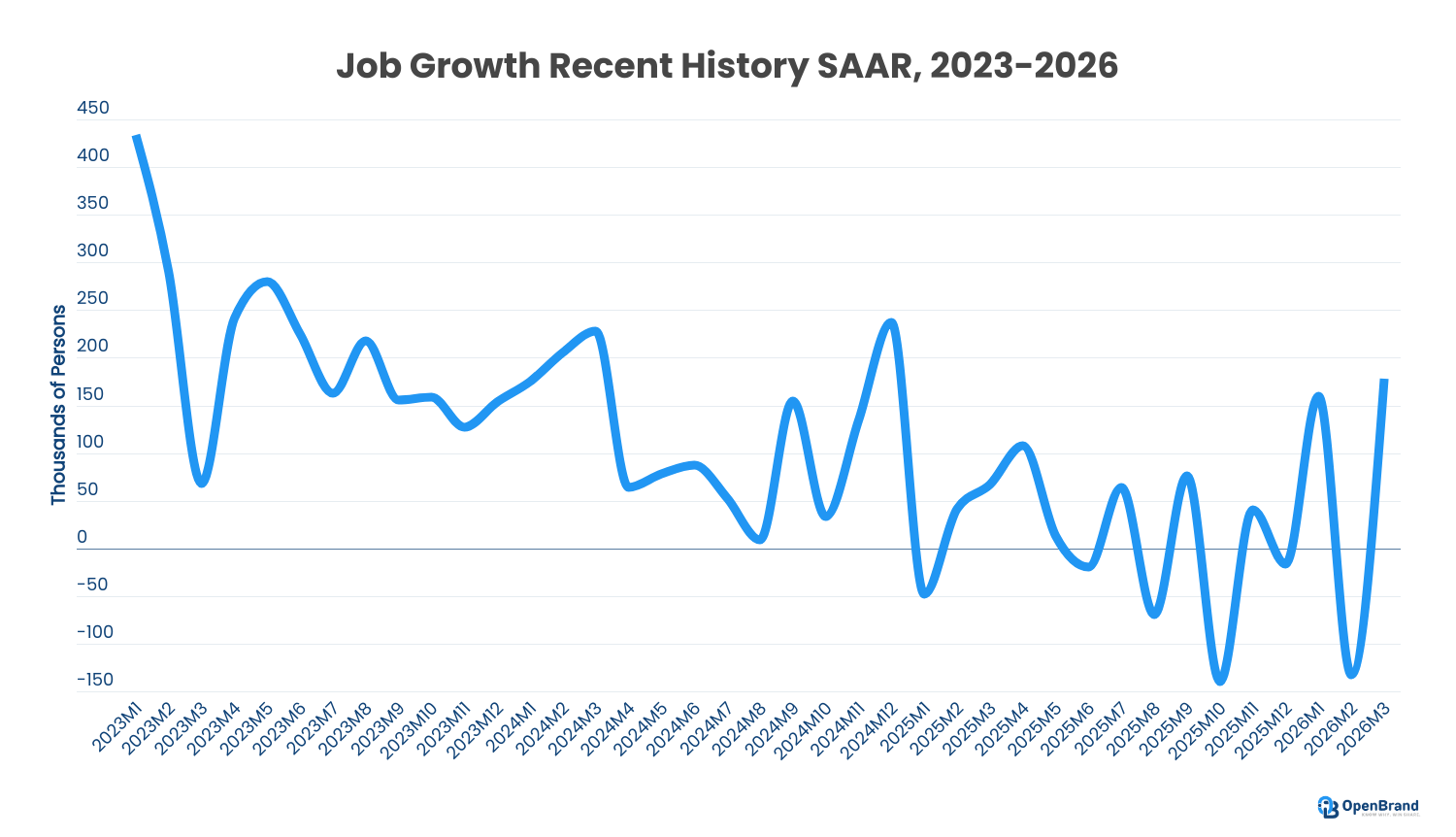
Federal Reserve research indicates that the so-called “breakeven” point for job growth may be settling near zero, driven by a shrinking labor force participation rate, weak population growth, and low net immigration. As a result, negative job growth may be almost as likely as positive job growth in any given month, as was represented at the start of this year. A few years ago, a payrolls increase of less than 100,000 would’ve raised alarms, but the Federal Reserve research suggests that such figures are probably part of a new normal.
Productivity has also increased as a result of AI and other innovations, which may substitute for the decline in worker participation in the years ahead. One of the major sources of economic growth may be less about hiring people, and more about productivity and investment in data centers and technology. If the productivity trend continues, this would actually tend to push prices downwards, all else equal.
U.S. Retail Sales and Consumer Sentiment Trends
At the start of the year, the American consumer continued to show signs of resiliency. In February, consumer spending grew by 3.7% from a year earlier, representing widespread growth across in-store shopping, general merchandise, and more.
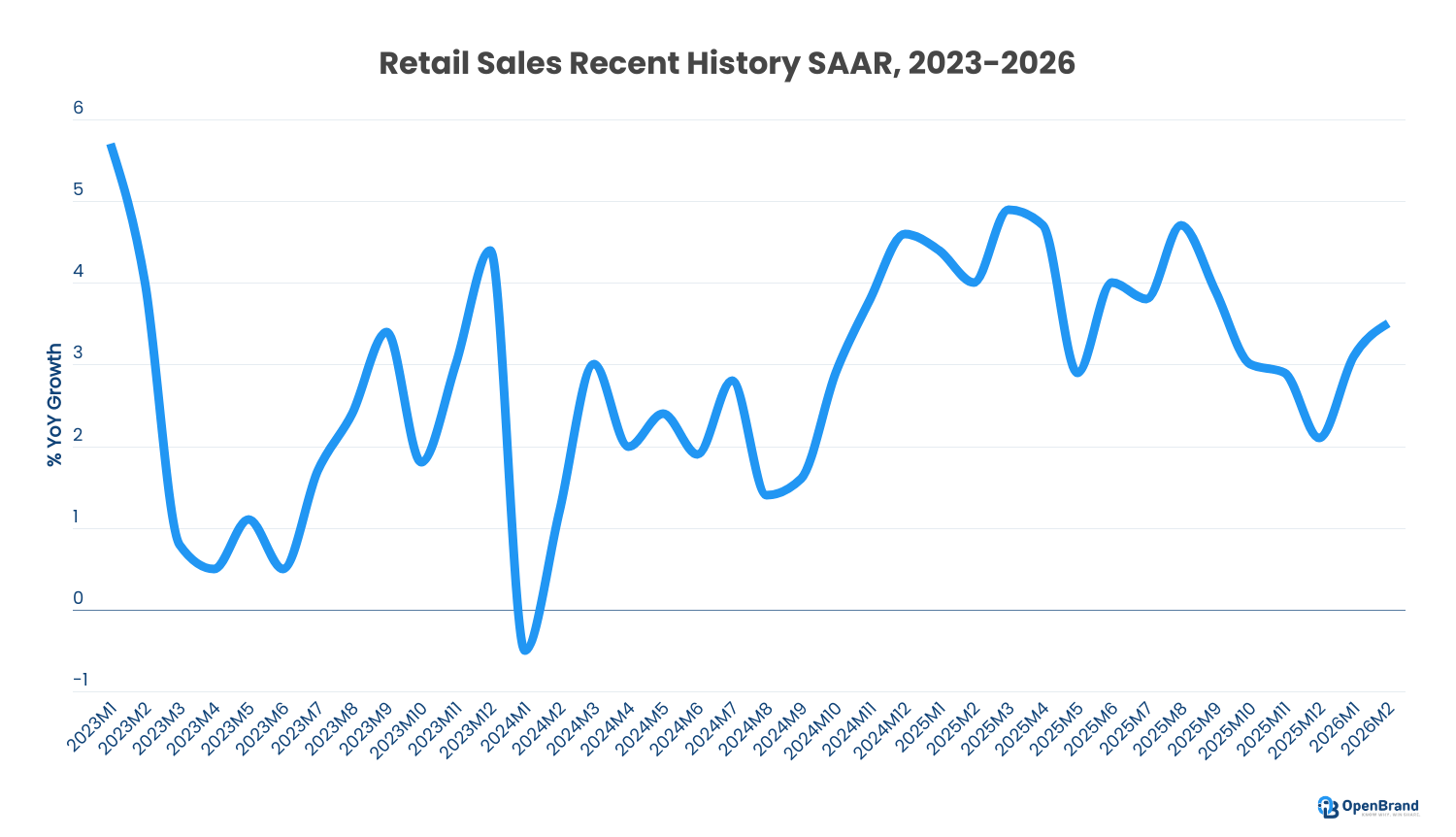
Despite the uptick in expenditures, University of Michigan consumer sentiment numbers show that the American consumer is the most pessimistic they’ve been in the 80 year history of the dataset.
The question here is whether to trust how people feel about the economy or how they actually act. A similar dynamic emerged with tariffs last year; when a huge dive in consumer sentiment contrasted with data that suggested consumers didn’t spend any less.
I might not feel too great about my lawn care bill, Greg said in the discussion, but that doesn’t necessarily mean I’m going to stop taking care of my lawn.
As the impact of the 2026 oil shock moves through the economy, we’re watching to see whether expenditure data from March and beyond will ultimately match what appears to me a broadly negative feeling about the state of the economy.
Key Considerations During 2026 Oil Shock
For Durables Brands and Retailers
- With oil-driven cost pressures top-of-mind across the economy, brands and retailers will need to carefully manage pricing and promotions to protect margins without leading to demand destruction.
- Close monitoring of macroeconomic signals-especially inflation trends, productivity investments, and geopolitical developments-is essential to anticipate changes in consumer demand and adjust strategy accordingly.
- Clear differentiation—either through quality, features, or price—is key to attracting consumers as larger-than-usual tax refunds stimulate spending.
- Supply chain flexibility remains a priority as volatility in energy prices puts pressure on transportation and logistics for many brands and manufacturers.
Want to better understand how to adapt to the changing macroeconomic environment? OpenBrand offers a Durables-grade Consumer Price Index that provides a nuanced look at price inflation specific to the market, real-time pricing data, and custom economic forecasting based on ever-shifting scenarios.
Subscribe to OpenBrand’s Newsletter
Monthly State of Durables Updates
Subscribe to our newsletter for monthly updates on how the current macroeconomic environment is impacting the durables market – and get our quarterly State of Durables update delivered to your inbox.