





Line reviews are one of the highest-stakes conversations between brands and retailers.
The buyer has already seen a dozen decks before yours. Most of them look the same.
The brands that walk away with more shelf space aren’t always the ones with the best products. The decision of who keeps shelf space, who gains it, and who loses it often comes down to who came prepared with the right story, backed by the right numbers.
New to line reviews? [Start here].
Here’s the data you need to improve your line review outcome.
The Data Types That Matter in a Line Review
Not all data carries equal weight in a line review. Retailers care about category growth, assortment optimization, and whether your brand is helping them increase shopper dollars.
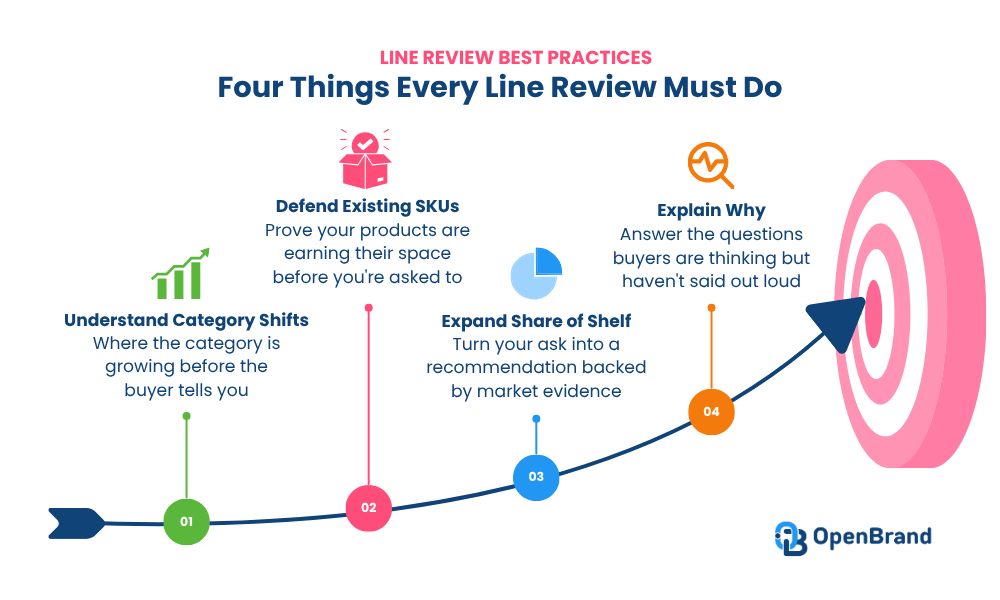
With the right brand data, Line Review presentations are able to confidently do the following things:
- Understand category shifts
- Defend existing SKUs
- Make the case for expanding share of shelf
- And (most importantly!) explain why
Each requires a different type of evidence, and buyers notice when they are missing.
Most teams walk in with the internal proof already covered: sell-through trends, margin performance, promotional ROI, inventory, etc. It’s the external data that really elevates the story.
To be clear, internal data is critical – and buyers expect to see it. But internal data only tells the buyer how your products performed at their store. Internal data doesn’t answer the harder questions: How does that performance compare to the market? Where is the category headed? What’s missing from the shelf and why should it be yours?
That’s where external data completes the picture. Let’s look at the internal vs. external data sources and the value they bring.
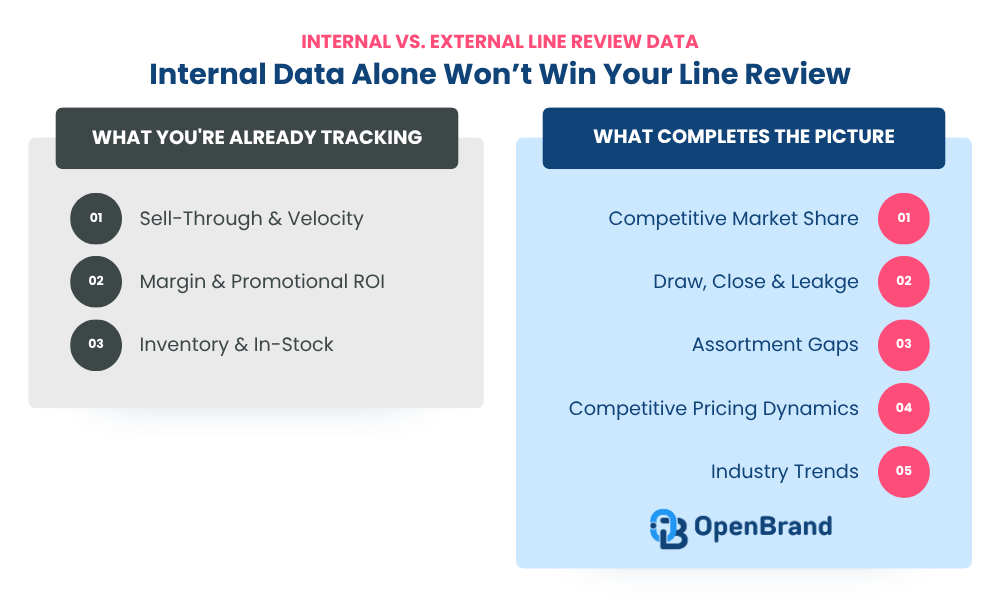
Internal Brand Data: Your Product Line Review Baseline
Sell-through & velocity
Your baseline. Shows which SKUs are earning their space and which aren’t pulling their weight.
Margin & promotional ROI
Demonstrates that your products are profitable for the retailer and that your promotional investment is working.
Inventory & in-stock performance
Establishes operational credibility and shows you can support the assortment you’re recommending.
External Market Data: What Completes the Line Review Story
Market share
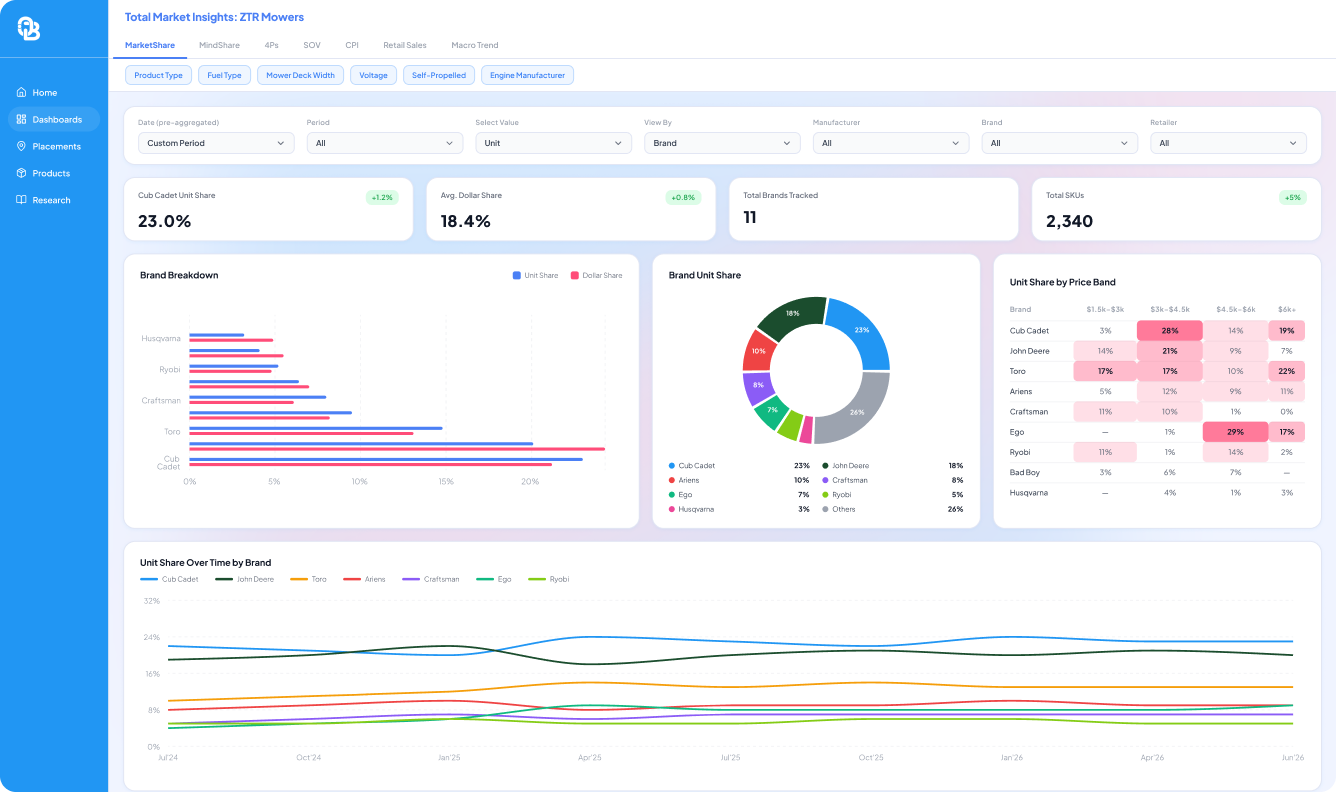
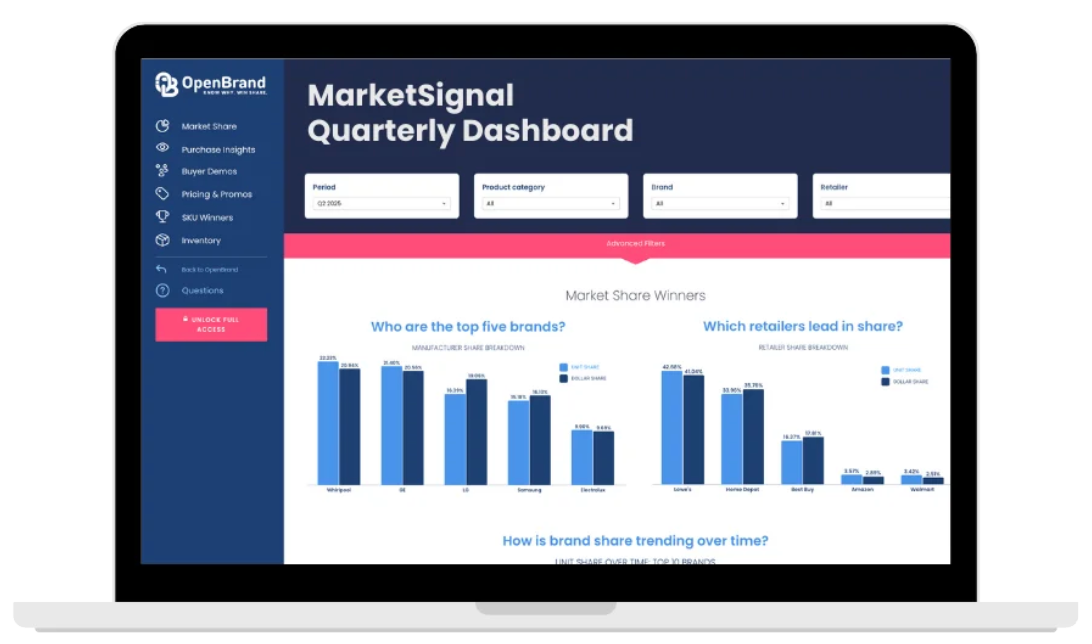
Unit and dollar share across retailers and brands shows where the category is concentrating and where it’s leaking. The right market share data will give the buyer a clear view of the competitive landscape and position your brand within it.
Draw & close rates
Retailers can have strong shopper traffic but still lose the sale. The right conversion data reveals where intent breaks down and gaps exist, with the ability to connect that to pricing, placement, or product mix.
Walk rate & leakage
Where do shoppers go when they don’t buy at this retailer? Where do they go when they don’t buy your brand? This right leakage data pinpoints competitive threats and helps you build a case for why your products close the gap.
Pricing & promotions
Price is often the primary decision factor. Showing how your pricing and promotional cadence aligns with shopper demand and competitors matters to buyers focused on conversion. The right pricing data will help you connect back to leakage, draw, share, and beyond.
Assortment gaps
Which segments are underserved? Where is your competitor winning volume that this retailer is not capturing? The right assortment data helps map SKU coverage to demand signals so buyers can understand what they’re leaving on the table.
Industry trends & innovations
Regulatory changes, technology shifts, and emerging consumer behaviors all affect what products will matter on shelf in the next 12–18 months. Bringing that context elevates your role from vendor to category expert.
Why Each Line Review Data Type Matters to the Retailer
Buyers run their own performance analysis for your brand and SKUs before you even walk in the door. What they want from a supplier is the external layer. They want to see the market context they can’t easily find in their own internal data.
Here are examples of how each data type maps to the four things your line review needs to do.
Line Review Best Practice #1: Understand Category Shifts
Understanding category shifts means showing where demand is moving, which segments are growing and plateauing, and how shopper behavior is evolving. Buyers need to understand the category before they evaluate any individual brand. If you bring that context, you control the starting point of the conversation.
Market share and industry trend data give you that view. They show where the category is growing, which segments are outpacing the rest, and where this retailer is under-indexed relative to the market. It’s the picture of the category that the buyer’s own POS data can’t provide.
If you’re still building out your overall preparation approach, this guide covers how to structure your full PLR presentation.
Line Review Best Practice #2: Defend Existing SKUs
Defending your SKUs means proactively proving they’re earning their space. Buyers evaluate every item through the lens of productivity, and the brands that keep their shelf space come in ready to show their products are working.
Draw, conversion, and pricing data make the case for what’s already on shelf. When you can show that your products are driving traffic, converting at a competitive rate, and supporting the retailer’s margin goals, decreases in shelf space becomes a much harder argument to make.
Line Review Best Practice #3: Confidently Recommend Expanding Share of Shelf
A request for more space without market support reads as self-serving. A recommendation backed by external demand data, showing a real gap in the current assortment and a clear shopper need your product fills, reads as category expertise.
Assortment gap analysis is where the line review shifts from defense to offense. You’re showing the buyer what’s missing from the current set, what shopper demand looks like for those gaps, and which of your products are positioned to capture it. That’s a fundamentally different conversation.
This is where a product library and SKU-level data, both complete with rich product specs, is key to figuring out whitespace and opportunity in the market.
Not to mention this is the kind of data that will turn line reviews into an easy decision for the retailer. It’s about creating a win-win partnership, backed by data, between your brand and your buyers.

Line Review Best Practice #4: Explain Why
Buyers are asking “why” even when they don’t say it out loud. Why is this segment growing? Why does this SKU belong here? Why will this assortment hold up next year? The brands that answer it proactively get treated as partners, not vendors.
Trend and innovation data is what lets you answer those questions with confidence. It shows retailers that the assortment you’re recommending will be competitive 18 months from now, accounting for regulatory shifts, emerging features, and segment growth trajectories. That forward-looking view is what separates a vendor pitch from a category partnership.
How External Data Wins Line Reviews
When your data maps cleanly to each of those four objectives, you stop defending your position and start driving the agenda.
Here’s the problem most teams run into: they spend months building their internal story and show up to the line review with a clean deck. The buyer nods, asks a few questions, and moves on.
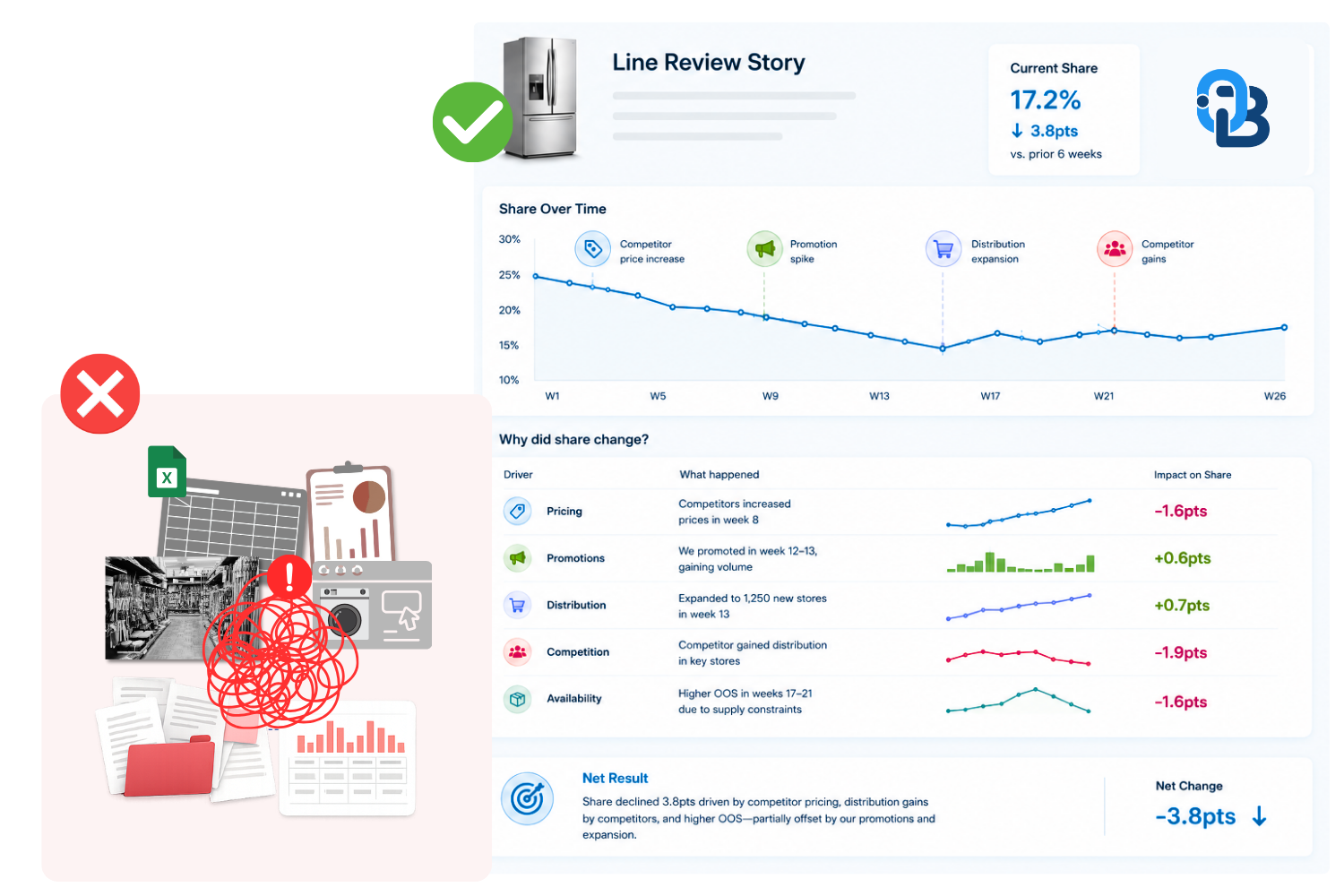
That’s because internal data alone doesn’t answer the retailer’s most pressing question: Compared to what?
External data fills that gap. When you can show how your conversion rate compares to the rest of the category at that specific retailer, how your brand’s walk rate stacks up against competitors, or how your segment is trending relative to the market, you’re giving the buyer something they can’t get anywhere else in the room.
That’s your edge: the data that gives the retailer a reason to act.
The brands that win shelf space in competitive reviews aren’t always the ones with the biggest promotional budget or the longest relationship. They’re the ones who showed up with a point of view that matched the retailer’s priorities, with the numbers to back it.
It’s about creating an easy, compelling case for your buyer that makes it advantageous on both sides of the conversation to green light more shelf space.
You Control the Story. We Bring the Market Data.
You know your products, your category, and your account relationship better than anyone. No data partner changes that. What external data does is give you the market context to make your story defensible through the category view, the competitive dynamics, and the shopper behavior patterns that your internal data can’t capture on its own.
OpenBrand gives durable goods brands the market, retailer, and category intelligence they need to build that case. From retail share and conversion benchmarks to assortment gap analysis and trend context, we bring the external signals that connect your recommendations to what’s actually happening in the market.
The result: a line review where you’re driving the category conversation, not just defending your position in it. That’s the difference between leaving with more shelf space and leaving with a follow-up email asking you to justify your numbers.
When you control the conversation, you control the outcome.
Request Custom PLR Data
Want to see how this comes together in practice? We deliver line review insights that map the right data to the right narrative, so you can walk into your next review with a complete story, not just a slide deck.
You can preview and download our template here.
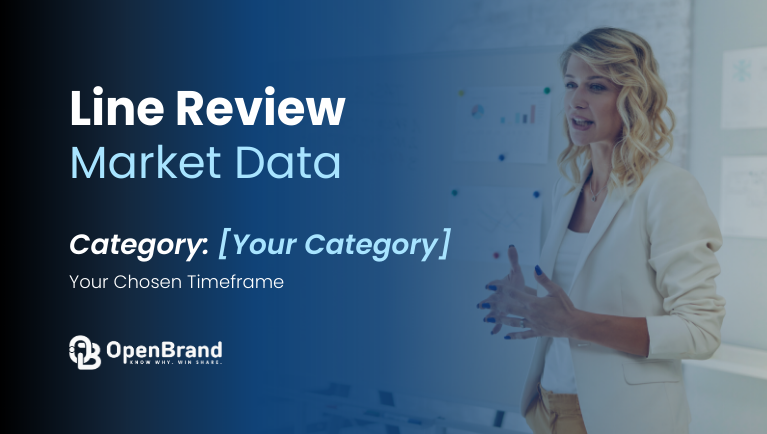

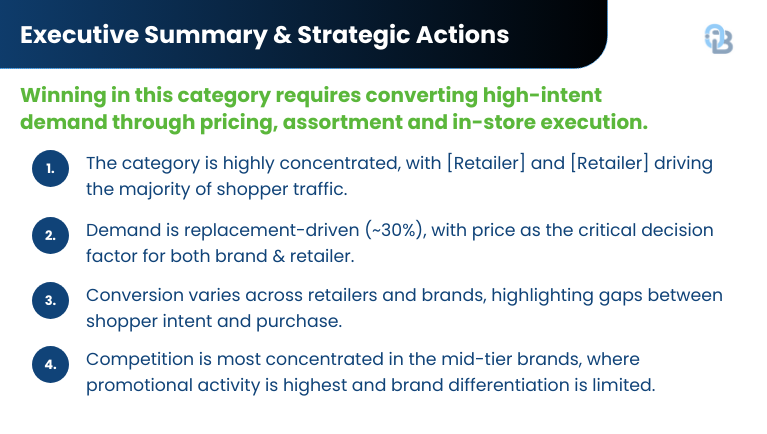


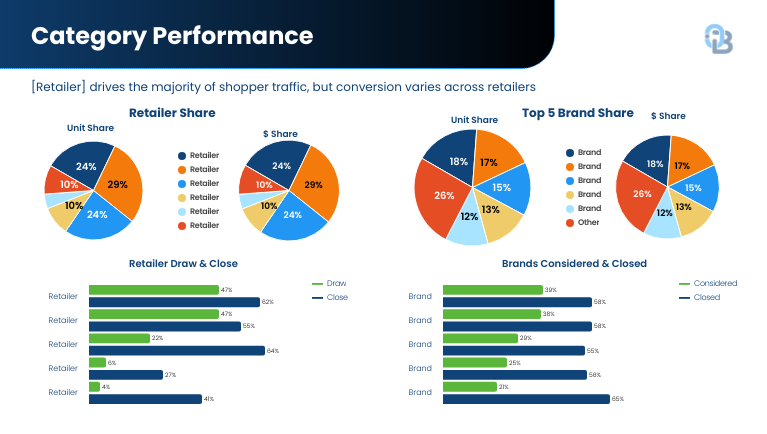
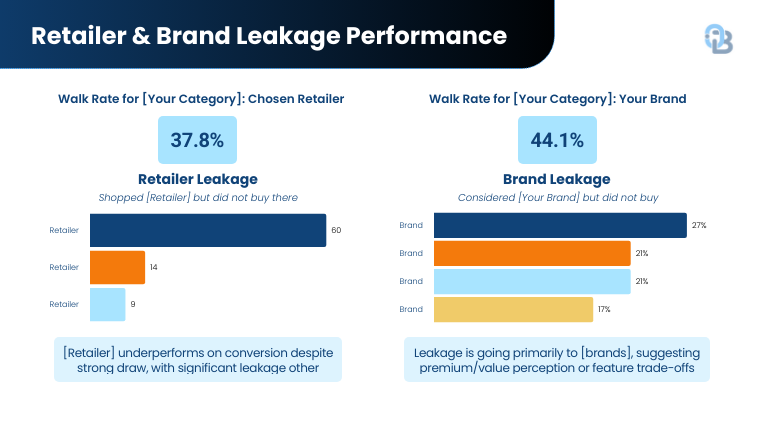
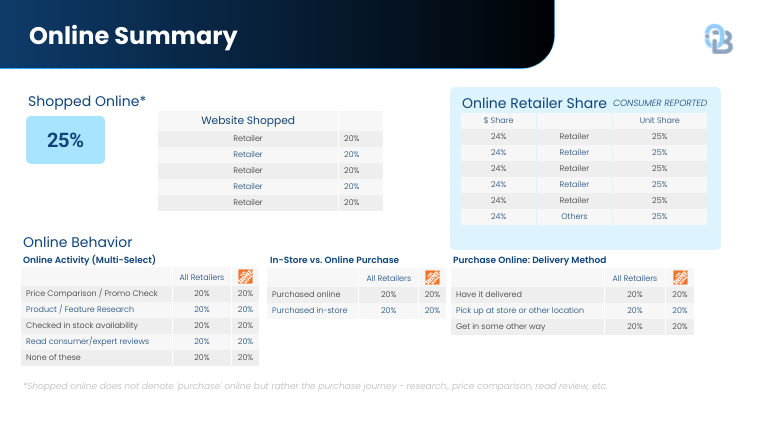

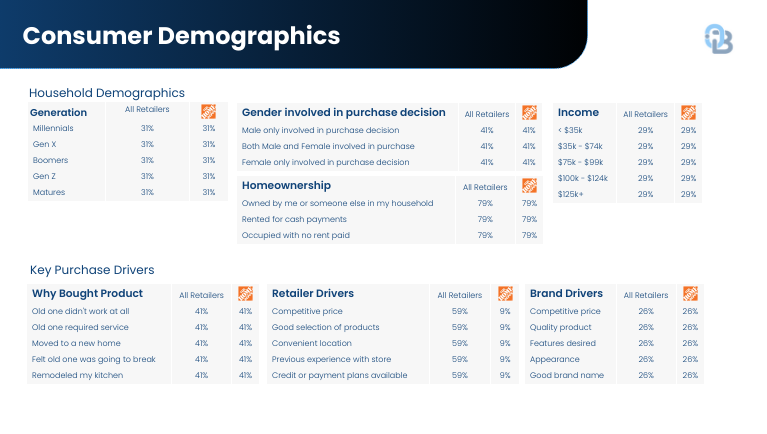
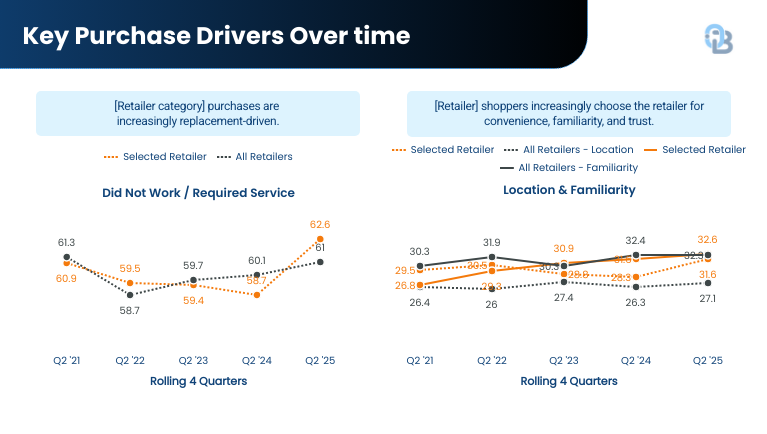
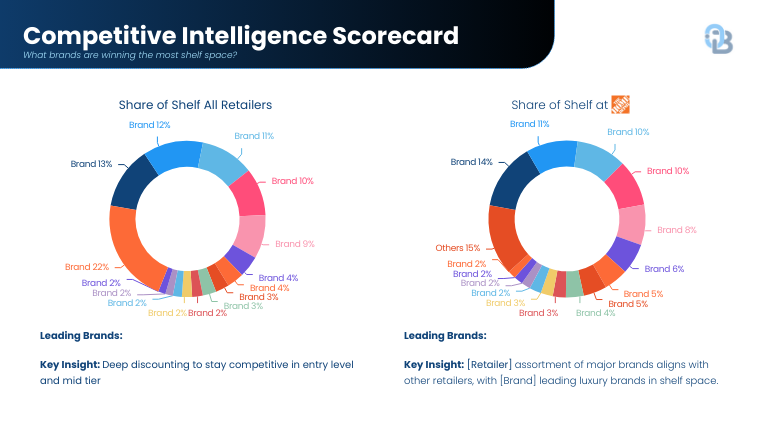
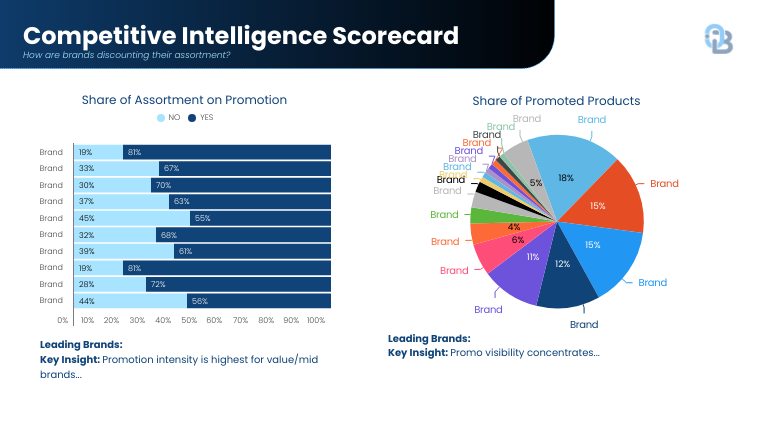
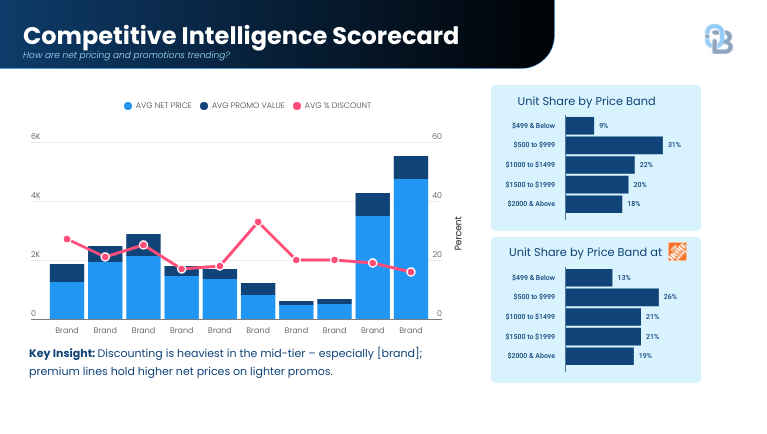
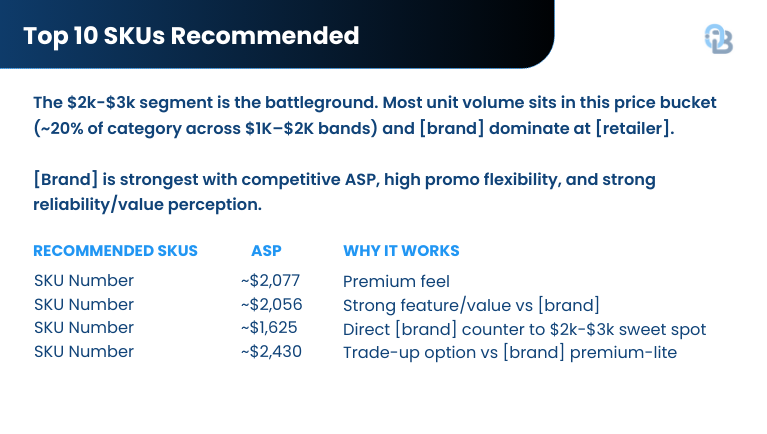


If you want to unlock the data to fill it out, connect with our team to get the conversation started. The completed report is free. Just let us know what retailers and products are most important to you. We’ll generate a custom report and setup time to walk you through the data.
FAQ
What is a line review?
A line review or category/product line review (PLR) is an annual or semi-annual meeting between a brand and a retail buyer where the brand presents performance data to defend existing SKUs and negotiate shelf space and assortment for the upcoming period. The brands that come in with the most complete data (internal and external) consistently leave with better outcomes.
What data should you bring to a line review?
The strongest line review presentations combine internal data (sell-through, margin, promotional ROI) with external market data including category share, segment trends, assortment gap analysis, and conversion benchmarks. Internal data shows how your products performed. External data shows why your recommendations are right for the category.
OpenBrand gives durable goods brands access to that external layer, from retail share and conversion benchmarks to assortment gap analysis and trend context.
How do you win a line review?
Winning a line review comes down to answering four things: demonstrating category shifts, defending existing SKUs with performance data, making a market-backed case for expanded shelf space, and explaining why the assortment you’re recommending will be competitive going forward.
OpenBrand’s PLR data is built to match exactly that framework, providing exclusive and proprietary market data that sets brands apart from their competitors and elevates line review success.
What is the difference between internal and external data in a line review?
Internal data is what you track in your own systems: sales velocity, margin, inventory.
External data comes from the broader market and includes retail share, shopper conversion rates, and category trend signals. External data gives retailers the “compared to what” context that internal data alone can’t provide.
OpenBrand specializes in that external layer for durable goods brands preparing for retailer reviews.