





You’ll sit through dozens of product line reviews this year. Most of them will show you the same things: velocity by SKU, year-over-year sales, maybe a trade spend summary. The competitive slide will conveniently leave out every brand doing better than theirs.
By the end of the meeting, you’ll have a thorough picture of how the vendor is performing at your stores. The harder question of how that performance compares to the broader market rarely makes it into the deck.
The five questions below are a framework for what a line review should actually leave you knowing. They’re not about making the vendor uncomfortable. They’re about walking out with a clear view of the category overall, as well as a clear view of that vendor’s position within it.
5 Questions Your Product Line Review Should Answer
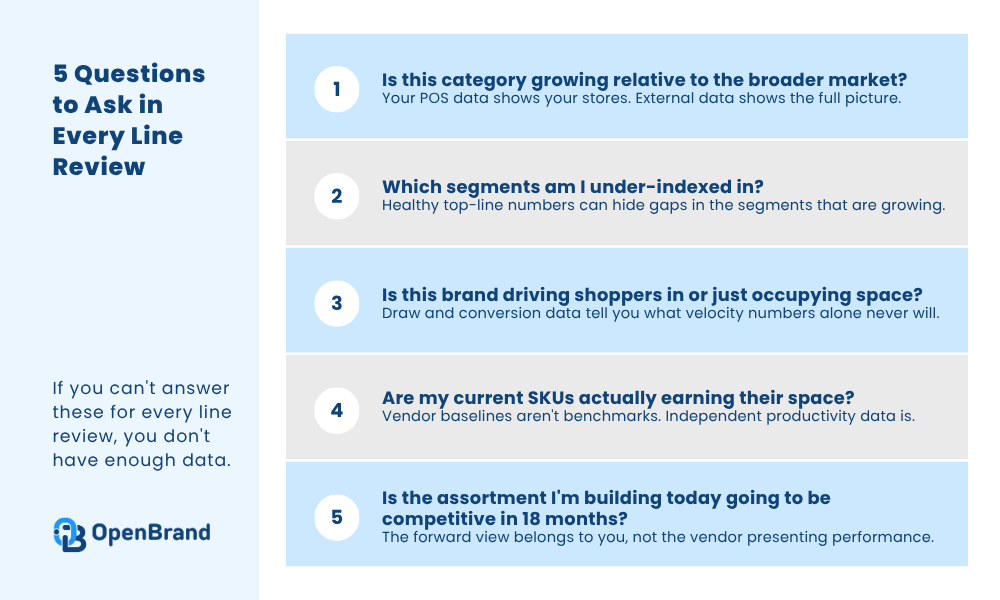
Q1: Is This Category Growing or Shrinking Relative to the Broader Market?
Your POS data tells you what’s happening at your stores. It doesn’t tell you whether you’re keeping pace with the market, lagging it, or outperforming it. That distinction matters enormously for how you treat a flat or declining category.
A flat category at your stores could mean three different things: the market is flat and you’re tracking it, the market is growing and you’re losing share, or the market is contracting and you’re actually holding up better than average.
Each of those calls for a different response. Without external market data, you’re making a call based on one data source, which is the same position the vendor is trying to put you in.
What to do about it: The benchmark you need isn’t in their deck. It has to come in with you.
Q2: Which Segments Am I Under-Indexed In?
Even a healthy overall category can have growth concentrated in a segment you’re barely carrying. Think price tiers, product formats, or feature-driven subsets of the category. If one of those is taking share in the market and your shelf set is thin there, that’s a gap in your assortment, not a reason to feel good about your top-line numbers.
Segment-level data is where most line reviews fall short. Vendors typically present at the brand level, occasionally at the sub-line level.
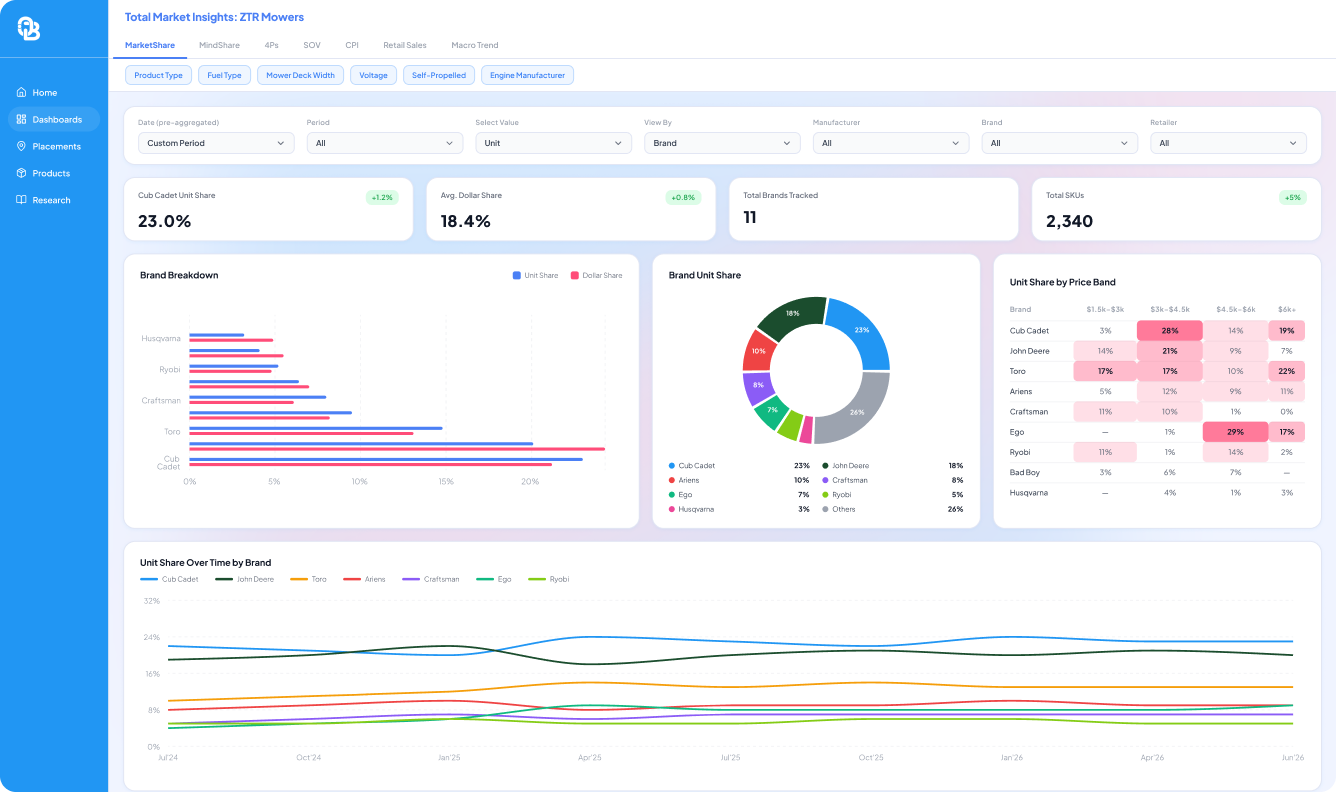
What you need is a read on how different segments within the category are performing across the market: which are gaining, which are plateauing, and what the trajectory looks like. That’s the context that tells you whether your current shelf set reflects where the category is going or where it was three years ago.
What to do about it: Don’t wait for a vendor to surface a gap that benefits them to fill. Know your segment coverage against the market before the meeting starts.
Q3: Is This Brand Bringing Shoppers In or Just Occupying Space?
Not every brand on your shelf is pulling its weight the same way. Some drive traffic. Some convert browsers into buyers. Some do neither and exist mainly because they’ve always been there. Draw and conversion data tell you which category a brand actually falls into.
A vendor will show you their velocity numbers. What they likely won’t show you is whether shoppers who came in for their brand left with it, left with something else, or left without buying at all.
That gap between draw and close is where the real assortment decision lives. A brand with strong draw but weak close points to a pricing or placement problem. A brand with weak draw isn’t earning its space regardless of how its velocity looks.
What to do about it: Evaluate external draw, close, and leakage data for brands before the meeting, not during it. If you’re looking at a brand’s shelf contribution using velocity alone, you’re only seeing part of the picture.
Q4: Are My Current SKUs Actually Earning Their Space?
Every vendor walks in ready to defend their SKUs. The more useful question is whether you can evaluate them independently of whatever baseline the vendor chose to present against.
A vendor will almost always frame SKU performance against their own historical numbers. What that framing can’t tell you is how your shelf productivity compares to what’s typical for this category across other retail environments. Are you carrying SKUs that occupy space and drive low incremental value while higher-demand segments go underrepresented? Productivity benchmarking answers that. Vendor presentations typically don’t.
What to do about it: Run your own productivity benchmarks before the review, not after. If you’re evaluating SKU performance using only the vendor’s framing, you’ve already lost the upper hand.
Q5: Is the Assortment I’m Building Today Going to Be Competitive in 18 Months?
Most line reviews are backward-looking by design. Vendors present trailing performance because trailing data supports their case. The forward view of where the category is heading, which segments are early in their growth curve, and which are under regulatory pressure rarely comes from a vendor with a stake in the answer.
As the buyer, that forward view is yours to own. Which formats are gaining consumer attention? Which parts of this category face regulatory headwinds in the next two years? Which segments are late-stage versus just getting started?
If you’re not stress-testing your category strategy against those questions independently, you’re letting vendors set the agenda on a category you manage.
What to do about it: Build your forward view independently. Trend and innovation data should inform your category strategy before vendors arrive to tell you what it means for theirs.
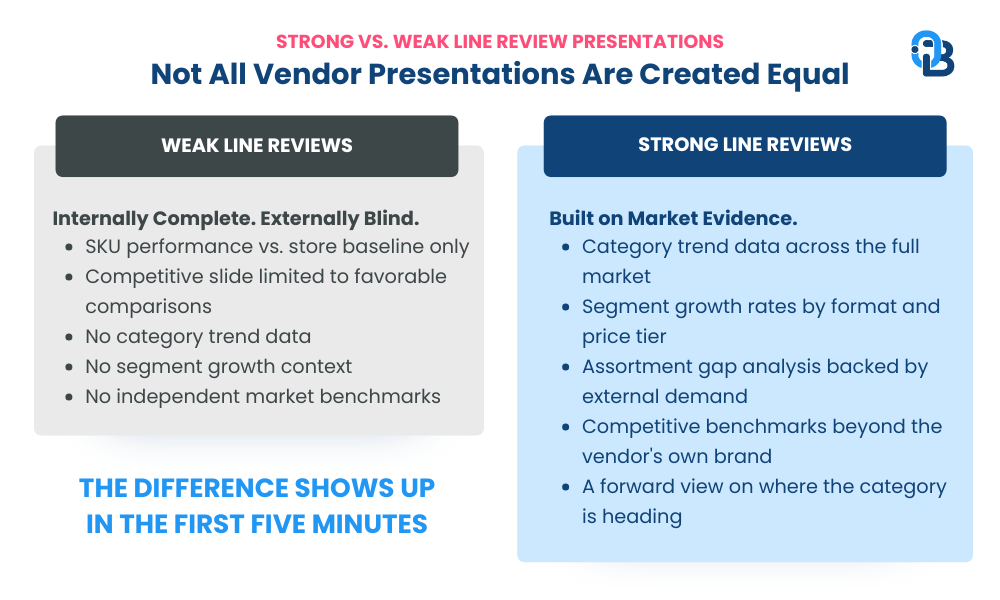
Strong vs. Weak Line Review Presentations: What to Look For
After enough product line reviews, you develop a quick read on presentations within the first five minutes. The evaluation lens for vendor presentations is simpler than most category managers make it.
Weak presentations are internally complete and externally blind. They show SKU-level performance at your store, brand trajectory against a narrow competitive set, and a pitch that assumes your store’s numbers are the whole story.
Strong presentations bring outside-in context. Category trend data. Segment growth rates across the market. Assortment gaps backed by evidence of consumer demand, not just vendor preference. There’s a meaningful difference between a vendor who has done the homework on the category and one who has done the homework on their own brand.
The tell is usually the competitive slide. A vendor who only shows you their own brand’s trajectory against your store’s baseline has done the minimum. A vendor who shows you how a whole segment is shifting, and where your assortment sits within it, has done something more useful.
If you’re on the brand side of this conversation, we’ve covered what your presentation should include.
The Data Blind Spot Most Retail Buyers Don’t Talk About
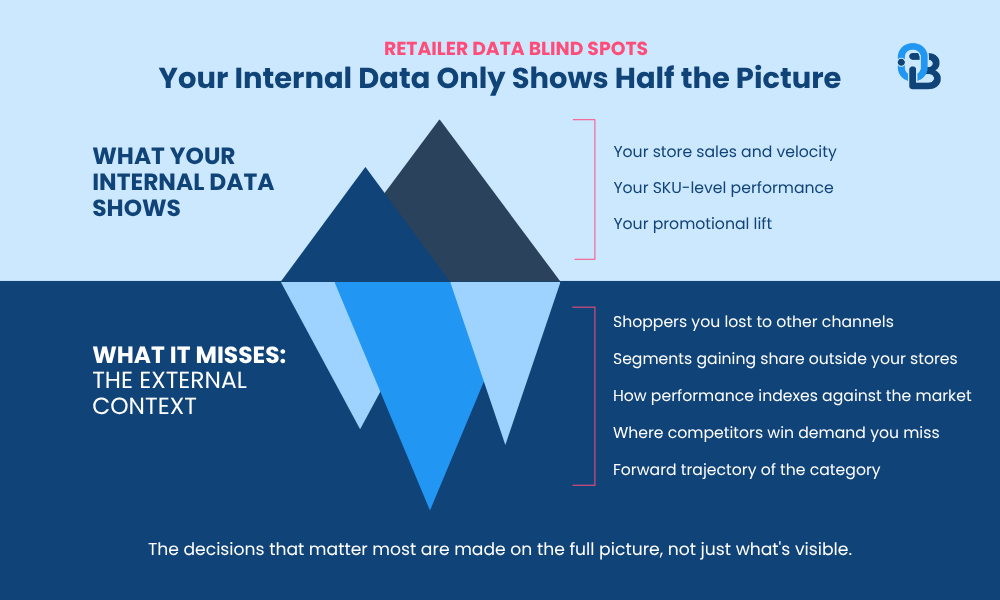
Category managers are rigorous about holding vendors accountable for data quality. They’re less rigorous about holding themselves accountable to the same standard. Most default to POS data as the primary source of truth, and that data only shows you your customers, not the ones you don’t have.
A buyer who has managed a stagnant category for three years and never benchmarked it against external market data may have been watching the category erode without a reference point to recognize it. The line reviews kept coming. The vendors kept optimizing their own position within a shrinking pie. Nobody brought the map.
This isn’t a failure of diligence. It’s a structural limitation of relying on a single data source. POS data is necessary. It isn’t sufficient.
A well-prepared brand will walk in with all four of these covered. Here’s what that preparation looks like from the brand side.
How Market Data Changes the Line Review Dynamic
When retailers have external market intelligence that’s independent of what vendors bring, the dynamic in the line review changes.
Stop evaluating a vendor’s claims in isolation. Start pressure-testing them against a market view you already have.
If a vendor says their segment is growing, you can verify it. If they’re pitching for more facings based on velocity trends, you can cross-reference whether their segment is gaining or losing share at a market level. That cross-reference is what separates a confident shelf decision from one that’s based on whoever gave you the most polished presentation.
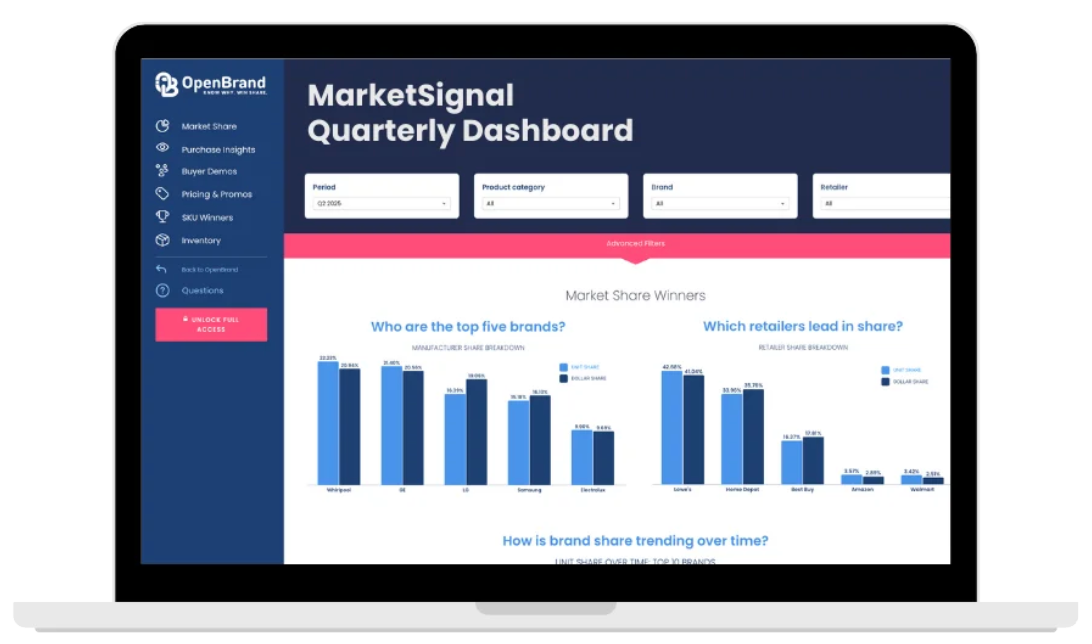
OpenBrand gives retailers that external layer: market trends, assortment benchmarking, and segment-level performance data across channels. The practical effect is faster decisions, more confidence in assortment calls, and a line review that’s a genuine strategic conversation rather than a vendor pitch you’re evaluating without a reference point.
Request Custom PLR Data
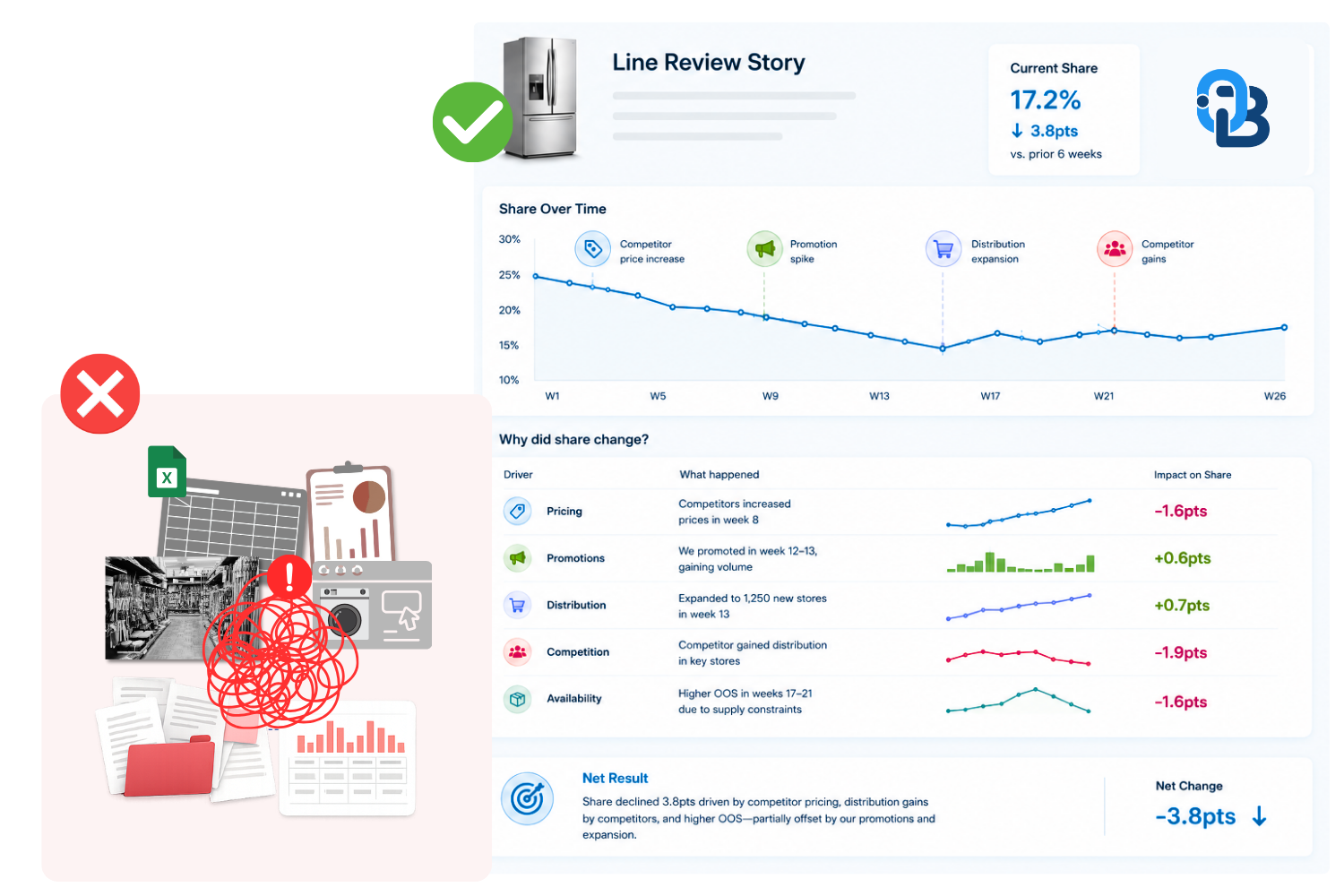
Want to see how this comes together in practice? Our line review insights map the right data to the right narrative, so you can walk into your next review with a complete story, not just a slide deck.
You can preview and download our template here.

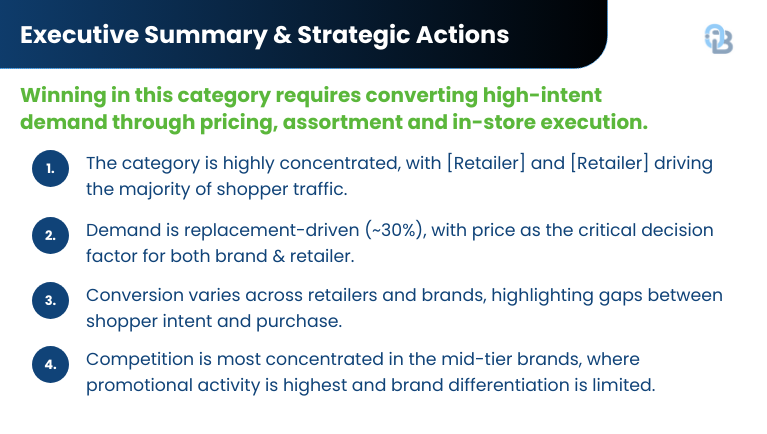


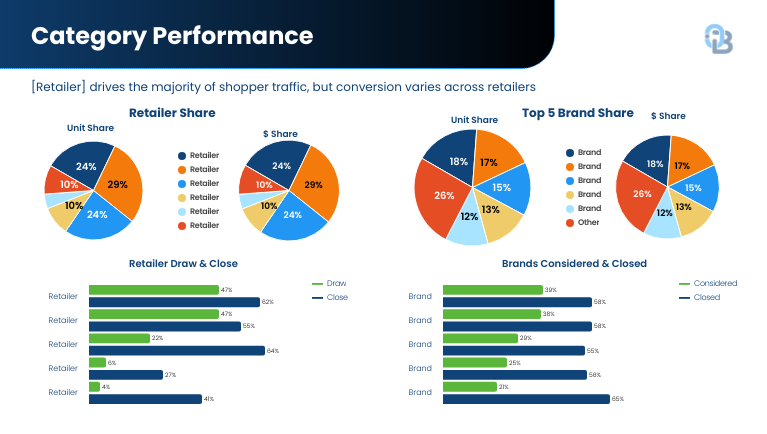
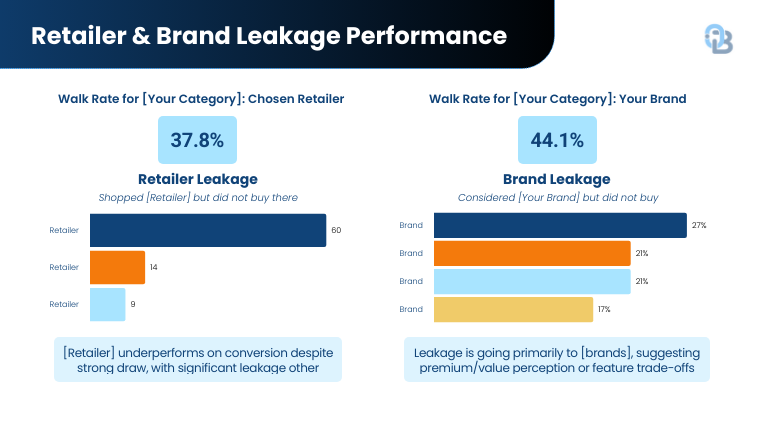
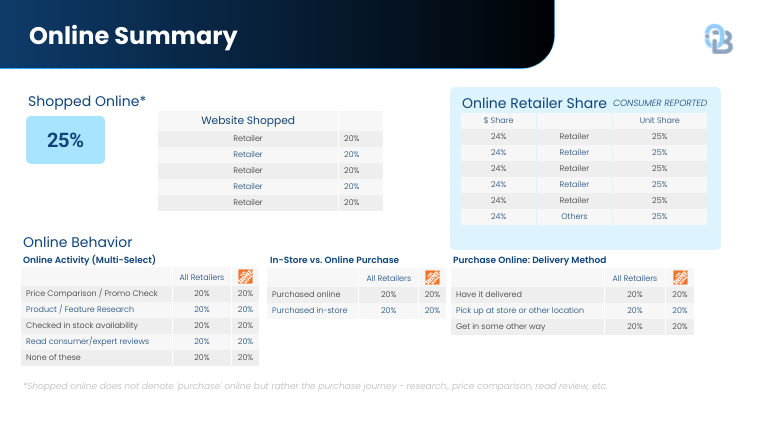

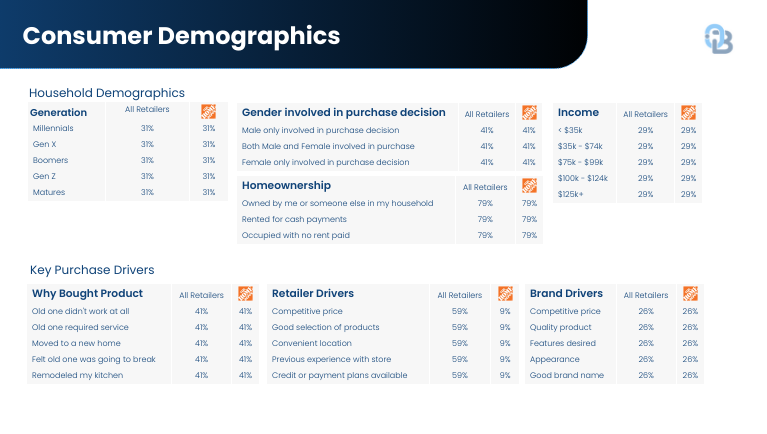
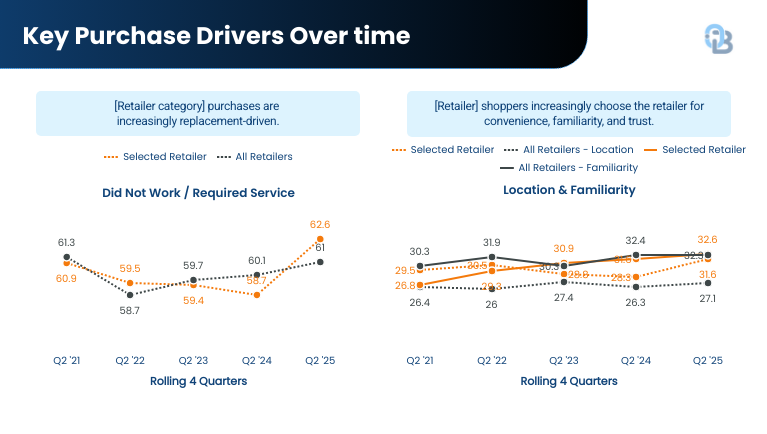
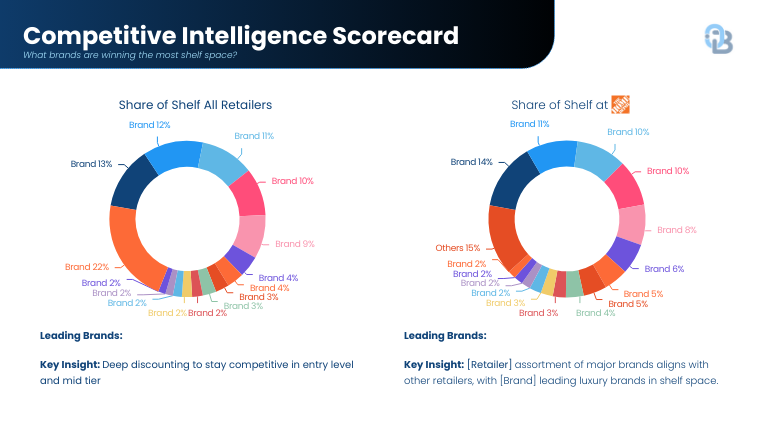
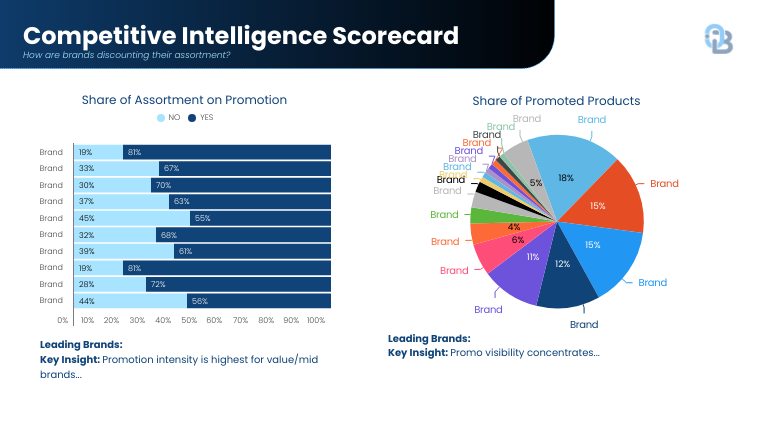
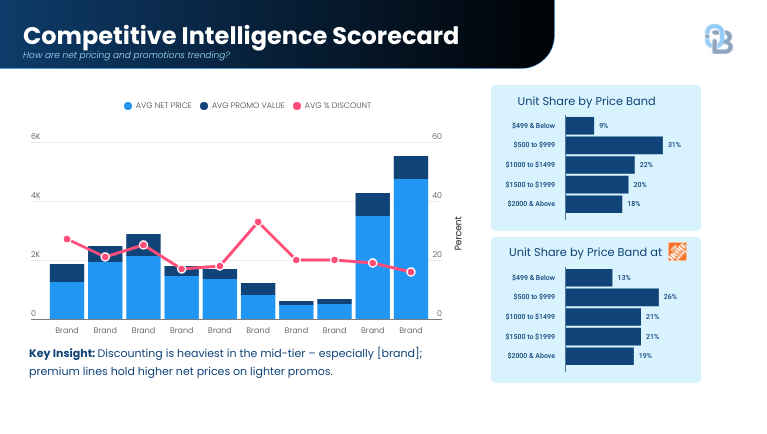
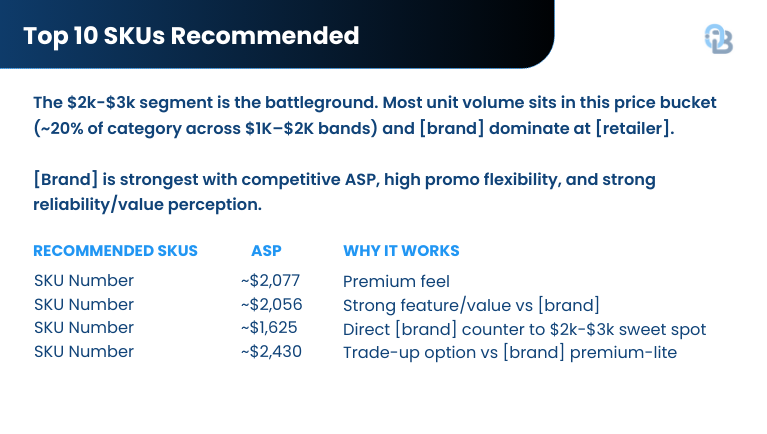


If you want to unlock the data to fill it out, connect with our team to get the conversation started. The completed report is free. Just let us know what retailers and products are most important to you. We’ll generate a custom report and setup time to walk you through the data.
FAQ
What is a product line review?
A product line review (PLR) is a structured meeting where a brand presents category and brand performance data to a retail buyer to negotiate shelf space, defend existing SKUs, or propose assortment changes.
The quality of those decisions depends on whether the buyer has independent market data to pressure-test what vendors bring in, which is what OpenBrand provides for retail category teams.
What should a category manager get out of a product line review?
A category manager should leave a line review knowing whether the category is growing or contracting relative to the market, which segments are underserved in their current assortment, where they’re losing shoppers, whether existing SKUs are productive, and whether their assortment strategy is forward-looking.
OpenBrand gives retail buyers the external market intelligence to answer all five questions independently of what vendors present.
How do you evaluate vendor presentations in a line review?
The key differentiator is whether the vendor brings external market context or only internal performance data. Strong presentations include category trend data, segment growth rates across the market, and assortment gap analysis backed by external demand signals.
OpenBrand gives category managers an independent read on all of those signals so vendor claims can be verified, not just accepted.
Why isn’t POS data enough for a product line review?
POS data only shows what’s happening within your four walls. It doesn’t show whether you’re keeping pace with the broader market, which segments are growing outside your stores, or where you’re losing shoppers to other channels or formats.
OpenBrand fills that gap with market-level category intelligence that’s independent of what any single vendor brings to the table.